🌸 Bloom Kitchen

Asian Recipes for
Thriving with PCOS

21 days of high-protein, high-fiber meals inspired by the flavors of Asia — designed to support your hormones, blood sugar, and joy.

🥚 High Protein 🌿 High Fiber 🩷 PCOS Friendly
Show 63 recipes

Breakfast

White congee rice porridge bowl Breakfast

Protein Congee with Soft-Boiled Egg & Edamame

~26g Protein ~7g Fiber
Ingredients
Brown riceChicken brothEdamameSoft-boiled eggGingerScallionsSesame oilSoy sauce
Steps
  1. 1Rinse ½ cup brown rice. Add to pot with 4 cups chicken broth. Bring to boil, reduce to simmer.
  2. 2Cook on low heat 45–55 min, stirring occasionally, until creamy porridge texture.
  3. 3Meanwhile, boil eggs 7 minutes, then transfer to ice water. Peel and halve.
  4. 4Stir in ½ cup frozen edamame in the last 5 minutes.
  5. 5Ladle into bowls. Top with egg halves, scallions, grated ginger, sesame oil, and soy sauce.
Why it's great for PCOS: Brown rice's low glycemic index helps stabilize blood sugar, while edamame and egg add hormone-supporting protein and isoflavones that may help with estrogen balance.
Inspired by Woks of Life
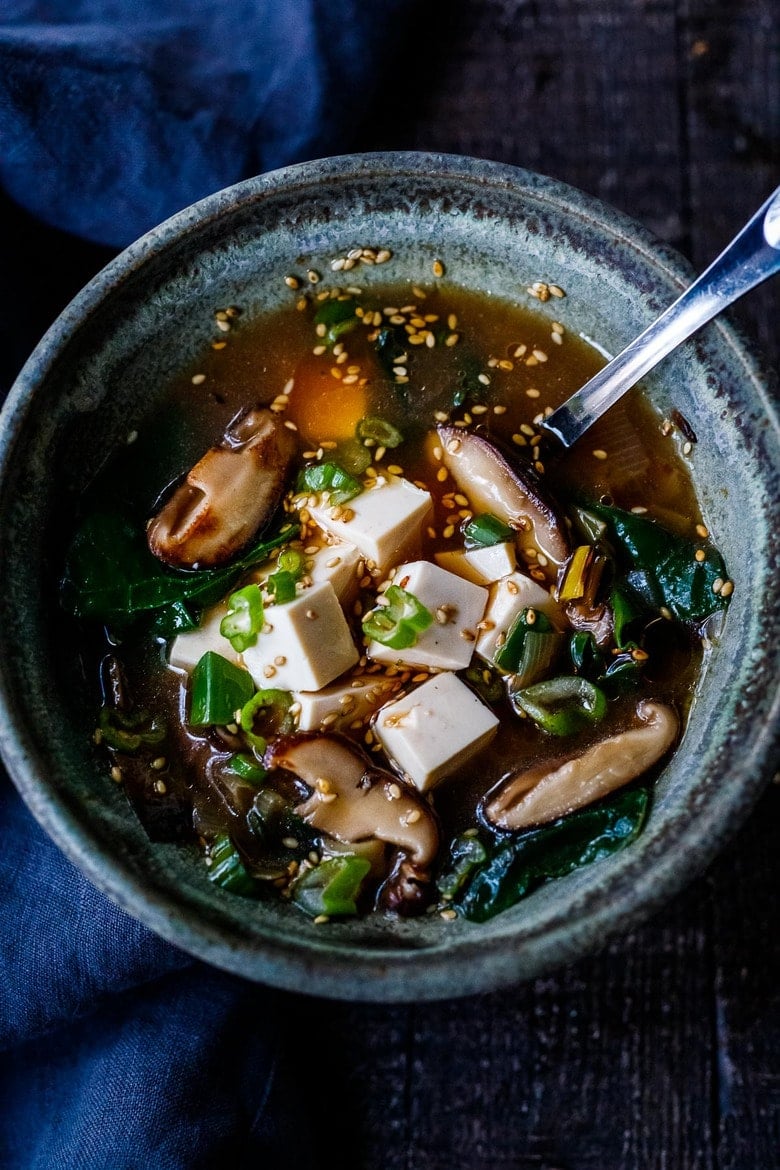
Miso soup tofu wakame spinach Breakfast

Hearty Miso Soup with Tofu, Wakame & Spinach

~18g Protein ~5g Fiber
Ingredients
Firm tofuWhite miso pasteWakame seaweedBaby spinachDashi or kombu brothScallionsMushrooms
Steps
  1. 1Bring 2 cups dashi broth to a gentle simmer. Add sliced mushrooms and cook 3 minutes.
  2. 2Add cubed firm tofu and rehydrated wakame. Simmer 2 more minutes.
  3. 3Remove from heat. Whisk in 2 tbsp white miso — never boil after adding miso to preserve probiotics.
  4. 4Stir in a handful of baby spinach and let it wilt in residual heat.
  5. 5Serve topped with sliced scallions.
Why it's great for PCOS: Miso's probiotics support gut health linked to hormonal regulation, and tofu's plant protein and isoflavones are associated with improved androgen balance in PCOS.
Inspired by Just One Cookbook
Matcha green oatmeal bowl black sesame walnuts Breakfast

Matcha Oatmeal with Black Sesame & Walnuts

~14g Protein ~9g Fiber
Ingredients
Rolled oatsMatcha powderSoy milkBlack sesame pasteWalnutsHoneyChia seeds
Steps
  1. 1Combine ½ cup rolled oats with 1 cup soy milk and 1 tsp matcha powder in a small saucepan.
  2. 2Cook over medium heat, stirring, until thick and creamy, about 5–7 minutes.
  3. 3Stir in 1 tbsp chia seeds in the last minute of cooking.
  4. 4Pour into a bowl. Drizzle with 1 tsp black sesame paste and a small drizzle of honey.
  5. 5Top with a small handful of roughly chopped walnuts.
Why it's great for PCOS: Oats' beta-glucan fiber slows glucose absorption and supports insulin sensitivity, while matcha's antioxidants reduce inflammation often elevated in PCOS.
Inspired by Minimalist Baker
Scallion egg tofu scramble brown rice Breakfast

Scallion Egg & Tofu Scramble on Brown Rice

~24g Protein ~6g Fiber
Ingredients
Firm tofuEggsScallionsTamariSesame oilBrown riceGarlicGinger
Steps
  1. 1Press and crumble firm tofu. Heat sesame oil in a non-stick pan over medium heat.
  2. 2Add minced garlic and ginger. Sauté 1 minute until fragrant.
  3. 3Add tofu crumbles and cook 3–4 minutes until lightly golden.
  4. 4Push tofu to side. Crack 2 eggs in and scramble gently, folding into tofu.
  5. 5Season with tamari. Serve over warm brown rice, topped with sliced scallions.
Why it's great for PCOS: The combination of egg and tofu delivers a substantial protein punch that supports satiety and blood sugar stability throughout the morning.
Inspired by Woks of Life
Filipino daing na bangus fried milkfish garlic rice egg breakfast Breakfast

Filipino Daing na Bangus with Fried Egg & Garlic Rice

~32g Protein ~4g Fiber
Ingredients
Bangus (milkfish), butterfly-cutVinegarGarlic (generous)PeppercornsEggsDay-old brown riceCalamansiTomatoes (side)
Steps
  1. 1Marinate butterfly-cut bangus in vinegar, crushed garlic, and cracked peppercorns for at least 30 minutes (or overnight in the fridge for deeper flavor).
  2. 2Pat fish dry. Pan-fry skin-side down in a lightly oiled pan over medium-high heat 4–5 minutes until golden and crisp. Flip and cook 2 more minutes.
  3. 3In the same pan, fry eggs to your liking — sunny side up is traditional.
  4. 4For the garlic rice, sauté minced garlic in a small amount of oil until golden and fragrant. Add day-old brown rice and stir-fry 3–4 minutes until heated through.
  5. 5Plate rice, fish, and egg together. Serve with sliced tomatoes and a squeeze of calamansi over the fish.
Why it's great for PCOS: Bangus is one of the Philippines' most nutritious fish — rich in omega-3 fatty acids and selenium that directly support thyroid function, often impaired in PCOS. The vinegar marinade (daing) acts as a natural preservative and may help slow gastric emptying, contributing to more stable post-meal blood sugar. Garlic contains allicin, a compound shown to improve insulin sensitivity.
Inspired by Panlasang Pinoy
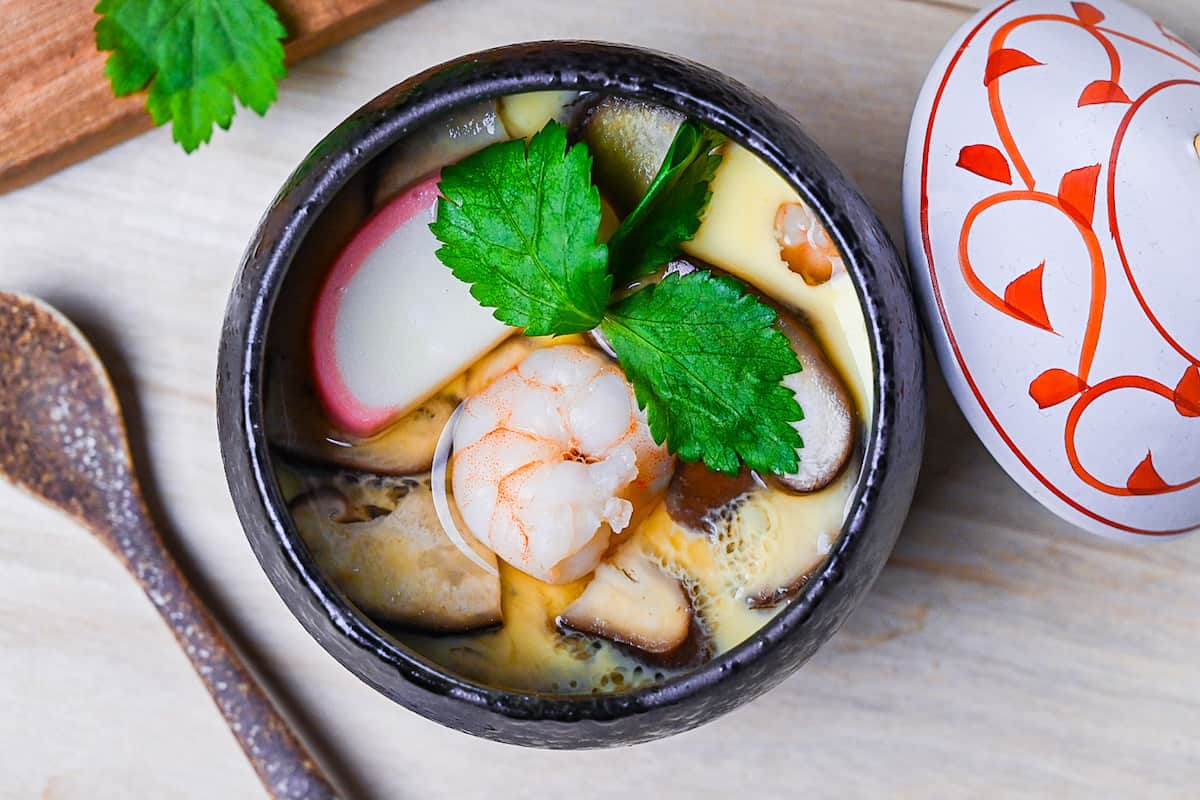
Japanese chawanmushi steamed egg custard shrimp mushroom Breakfast

Chawanmushi (Japanese Steamed Egg Custard) with Shrimp & Mushroom

~24g Protein ~3g Fiber
Ingredients
EggsDashi brothShrimpShiitake mushroomsMitsuba or chivesMirinSoy sauceYuzu or lemon zest
Steps
  1. 1Whisk 2 eggs gently with 1 cup cooled dashi, 1 tsp mirin, and 1 tsp soy sauce until smooth. Strain through a fine sieve.
  2. 2Place one shrimp and sliced shiitake mushrooms into each small cup or ramekin.
  3. 3Pour strained egg mixture over fillings. Cover cups with foil.
  4. 4Steam over low heat for 14–16 minutes until custard is just set but still wobbly in the center.
  5. 5Garnish with mitsuba or chives and a tiny grating of yuzu or lemon zest. Serve immediately.
Why it's great for PCOS: Dashi is rich in iodine from kombu, which supports thyroid function closely linked to PCOS metabolism. The silky egg custard delivers complete protein with virtually no carbohydrates, keeping morning insulin stable, while shiitake mushrooms add beta-glucans that improve insulin sensitivity over time.
Inspired by Just One Cookbook
Filipino Champorado Breakfast

Filipino Champorado with Tuyo Flakes & Chia

~18g Protein ~6g Fiber
Ingredients
Glutinous brown riceCacao powder (unsweetened)Soy milkStevia or honeyDried fish flakes (tuyo)Chia seeds
Steps
  1. 1Cook ½ cup glutinous brown rice with 2 cups water until soft and sticky, about 30–35 minutes.
  2. 2Stir in 2 tbsp unsweetened cacao powder and sweeten lightly with stevia or a drizzle of honey.
  3. 3Pour in ¼ cup soy milk for creaminess. Stir in 1 tbsp chia seeds.
  4. 4In a small pan, lightly toast or fry dried fish flakes until crispy.
  5. 5Serve champorado topped with tuyo flakes — the sweet-salty contrast is the heart of this dish.
Why it's great for PCOS: Cacao is rich in magnesium and polyphenols that support insulin sensitivity, while tuyo provides iodine important for thyroid function — often affected alongside PCOS. Brown rice adds steady energy without glucose spikes.
Inspired by Panlasang Pinoy
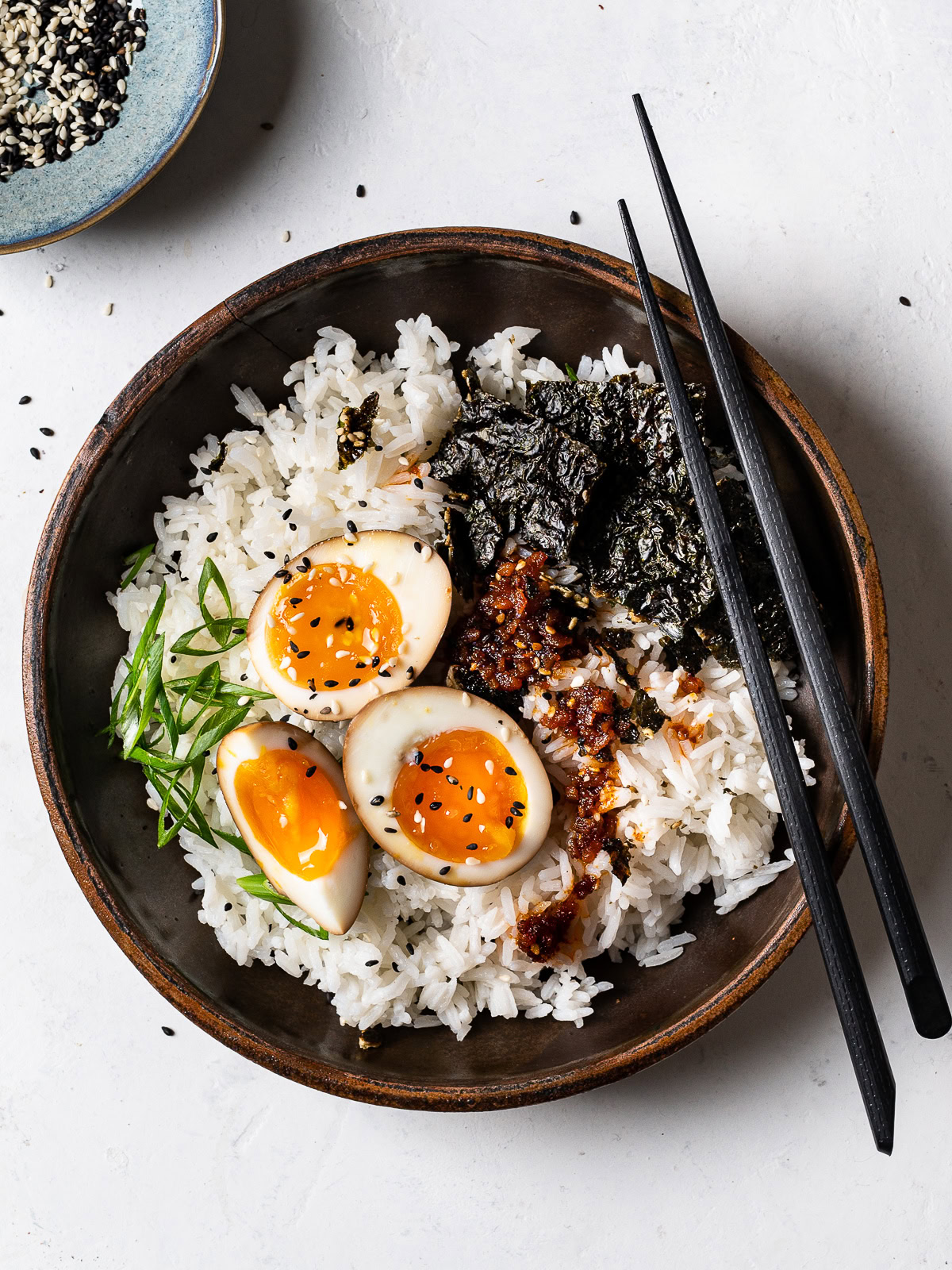
Japanese miso marinated soft boiled eggs brown rice furikake Breakfast

Japanese Miso Marinated Eggs with Brown Rice & Furikake

~22g Protein ~4g Fiber
Ingredients
Eggs (soft-boiled)White miso pasteMirinTamariShort-grain brown riceFurikake seasoningScallionsSesame oil (drizzle)Nori strips
Steps
  1. 1Soft-boil eggs: lower into boiling water and cook exactly 6.5 minutes. Transfer immediately to an ice bath for 5 minutes, then peel carefully.
  2. 2Whisk together 3 tbsp white miso, 2 tbsp mirin, and 1 tbsp tamari until smooth. Place peeled eggs in a zip-lock bag or small container with the marinade. Refrigerate at least 4 hours — overnight is best.
  3. 3Cook short-grain brown rice per package.
  4. 4Spoon rice into a bowl. Halve the miso-marinated eggs and place cut-side up on the rice so the jammy yolk is visible.
  5. 5Sprinkle generously with furikake, top with sliced scallions and nori strips, and finish with a few drops of sesame oil.
Why it's great for PCOS: Miso marination infuses eggs with fermented isoflavones and beneficial bacteria that support the gut-hormone axis disrupted in PCOS. Eggs are one of the most complete breakfast proteins and rich in choline, which supports liver clearance of excess estrogens. The slow-release brown rice keeps blood sugar stable through the morning, and furikake adds iodine-rich nori and sesame for thyroid and mineral support.
Inspired by Just One Cookbook
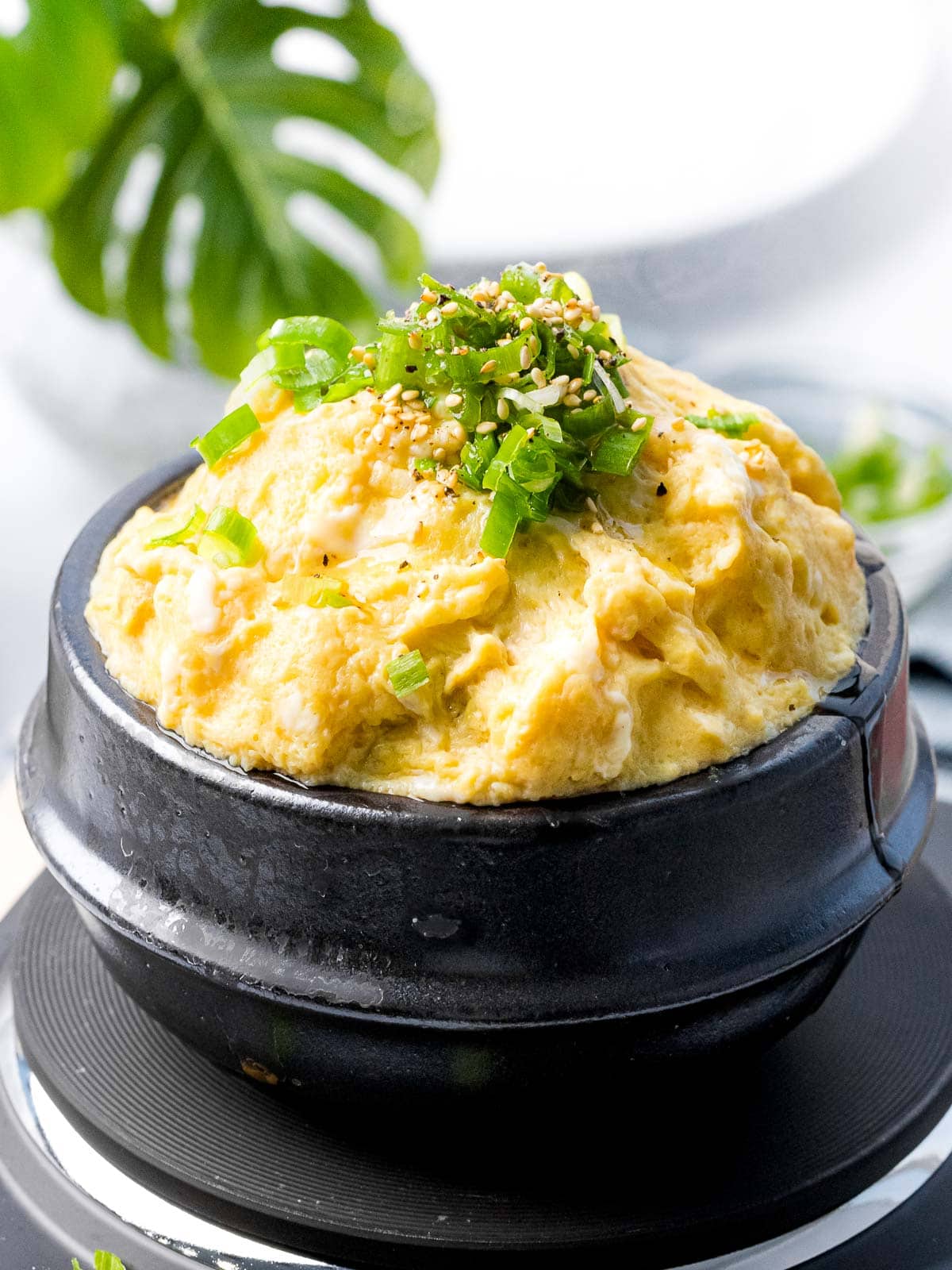
Korean gyeran jjim silky steamed eggs edamame Breakfast

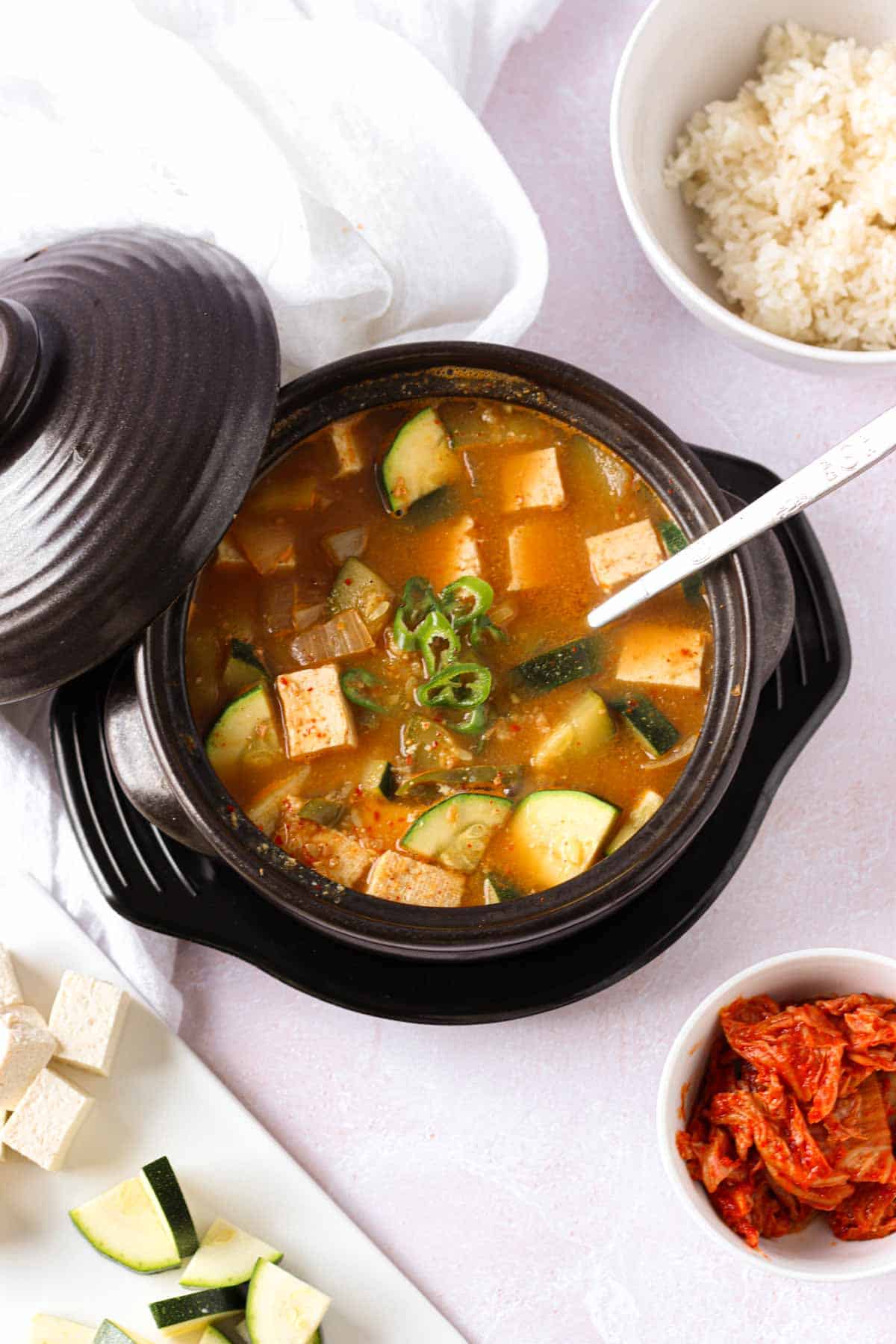
Korean Gyeran-jjim (Silky Steamed Eggs) with Edamame

~20g Protein ~4g Fiber
Ingredients
EggsEdamameAnchovy broth or dashiScallionsSesame oilSaltGochugaru (optional)
Steps
  1. 1Whisk 3 eggs with ¾ cup anchovy or dashi broth, ½ tsp salt, and a few drops of sesame oil.
  2. 2Pour into an earthenware pot or small oven-safe dish. Stir in a handful of edamame.
  3. 3Place pot in a larger pot with 1 inch of boiling water. Cover tightly.
  4. 4Steam on medium-low for 12–15 minutes until just set — jiggly like soft tofu.
  5. 5Garnish with sliced scallions and a pinch of gochugaru. Serve immediately in the pot.
Why it's great for PCOS: This low-carb, high-protein breakfast causes virtually no insulin response. Eggs provide choline that supports liver function — important since the liver is responsible for clearing excess hormones in PCOS.
Inspired by Maangchi
Korean doenjang soup egg zucchini tofu Breakfast

Korean Doenjang Soup with Egg & Zucchini

~16g Protein ~5g Fiber
Ingredients
Doenjang pasteZucchiniEggFirm tofuMushroomsGarlicScallionsAnchovy broth
Steps
  1. 1Bring 2½ cups anchovy broth to a gentle boil with 2 crushed garlic cloves.
  2. 2Dissolve 1½ tbsp doenjang paste into the broth, stirring well.
  3. 3Add sliced zucchini and mushrooms. Simmer 5 minutes.
  4. 4Add cubed firm tofu. Crack egg directly into simmering soup and poach gently 3 minutes.
  5. 5Top with scallions and serve hot, optionally with a small bowl of brown rice on the side.
Why it's great for PCOS: Doenjang is a deeply fermented paste — more probiotic-rich than miso — and its plant estrogens help modulate the androgen excess characteristic of PCOS. Zucchini provides potassium that helps manage the bloating common in PCOS.
Inspired by Maangchi
Japanese miso omelette brown rice scallions Breakfast

Japanese Miso Omelette with Brown Rice & Scallions

~24g Protein ~4g Fiber
Ingredients
EggsWhite miso pasteMirinSesame oilScallionsShiitake mushrooms (optional)Short-grain brown riceNori stripsSesame seeds
Steps
  1. 1Whisk 3 eggs with 1 tsp white miso paste, 1 tsp mirin, and a pinch of white pepper until the miso is fully dissolved and the mixture is smooth.
  2. 2If using shiitake mushrooms, sauté sliced mushrooms in a few drops of sesame oil for 2–3 minutes until golden. Set aside.
  3. 3Heat a non-stick pan over medium-low. Add a thin layer of sesame oil. Pour in egg mixture — it should sizzle gently, not aggressively.
  4. 4Let the edges set, then gently fold the omelette in half or thirds. Cook 1 more minute until just set but still slightly custardy inside.
  5. 5Serve over brown rice. Top with sautéed mushrooms, sliced scallions, sesame seeds, and nori strips.
Why it's great for PCOS: Miso whisked directly into eggs infuses the whole omelette with fermented isoflavones and probiotics that support the gut-hormone axis. Eggs provide choline for liver hormone clearance and complete protein to anchor blood sugar through the morning — critical for PCOS insulin management. The miso's umami also means no added salt needed, keeping sodium low.
Inspired by Just One Cookbook
Japanese onigirazu rice sandwich nori salmon Breakfast

Japanese Brown Rice Onigirazu (Rice Sandwich) with Salmon

~28g Protein ~5g Fiber
Ingredients
Short-grain brown riceCanned salmonJapanese mayo (small)Nori sheetsCucumberShiso leaves or spinachTamariSesame seeds
Steps
  1. 1Mix drained canned salmon with a small amount of Japanese mayo and a pinch of tamari.
  2. 2Lay a large nori sheet flat (shiny side down). Place ¾ cup cooked brown rice in the center. Press flat.
  3. 3Layer cucumber slices, shiso leaves or a handful of spinach, and salmon filling on top of the rice.
  4. 4Top with another thin layer of rice. Sprinkle sesame seeds.
  5. 5Fold nori corners up to wrap like a package. Slice diagonally and serve.
Why it's great for PCOS: Salmon is exceptional for PCOS — its omega-3s reduce androgen-driven inflammation and support progesterone production. Shiso is rich in rosmarinic acid, an anti-inflammatory compound, while cucumber adds hydration and silica that support skin health often affected by PCOS-related androgen excess.
Inspired by Just One Cookbook
Orange pumpkin porridge soup bowl Breakfast

Korean Juk (Pumpkin Rice Porridge) with Pumpkin Seeds

~14g Protein ~8g Fiber
Ingredients
Short-grain brown riceKabocha or butternut squashSoy milkHoneyPumpkin seedsCinnamonSalt
Steps
  1. 1Cube ½ cup kabocha squash and steam until very soft, about 15 minutes. Mash or blend smooth.
  2. 2In a pot, combine ¼ cup soaked brown rice with 2 cups water. Cook on low 30 minutes, stirring.
  3. 3Stir in mashed pumpkin and ¼ cup soy milk. Cook another 5 minutes until thick and smooth.
  4. 4Sweeten with a touch of honey and season with a pinch of salt.
  5. 5Serve topped with pumpkin seeds and a pinch of cinnamon.
Why it's great for PCOS: Kabocha squash is exceptionally rich in beta-carotene, which the body converts to vitamin A — a nutrient that supports progesterone production and helps regulate the menstrual cycle disrupted by PCOS.
Inspired by Maangchi
Filipino century tuna scramble garlic rice eggs Breakfast

Filipino Century Tuna Scramble with Garlic Rice

~28g Protein ~4g Fiber
Ingredients
Century Tuna (spicy or in oil)EggsGarlic (generous)Red onionScallionsFish sauceBlack pepperCoconut oilDay-old brown rice
Steps
  1. 1Heat coconut oil in a pan over medium. Fry sliced garlic until golden and crispy. Remove half and set aside as topping — leave the rest in the pan.
  2. 2Add diced red onion and cook 2 minutes until softened.
  3. 3Drain Century Tuna and add to the pan. Break up and stir-fry with the garlic and onion 2–3 minutes until lightly browned and fragrant.
  4. 4Push tuna to the side. Crack 2–3 eggs into the pan and scramble gently, folding them into the tuna as they set — you want soft, custardy curds running through the fish.
  5. 5Season with a splash of fish sauce and black pepper. Serve over garlic fried brown rice, topped with reserved crispy garlic and sliced scallions.
Why it's great for PCOS: Century Tuna is one of the most accessible sources of omega-3s and lean protein in Filipino pantries — both directly support the inflammation reduction and insulin sensitivity central to PCOS management. Eggs add choline for liver hormone clearance, while garlic's allicin compounds have documented anti-androgenic effects. Day-old brown rice provides resistant starch that significantly lowers the meal's glycemic impact.
Inspired by Panlasang Pinoy
Japanese tamagoyaki rolled omelette brown rice miso soup Breakfast

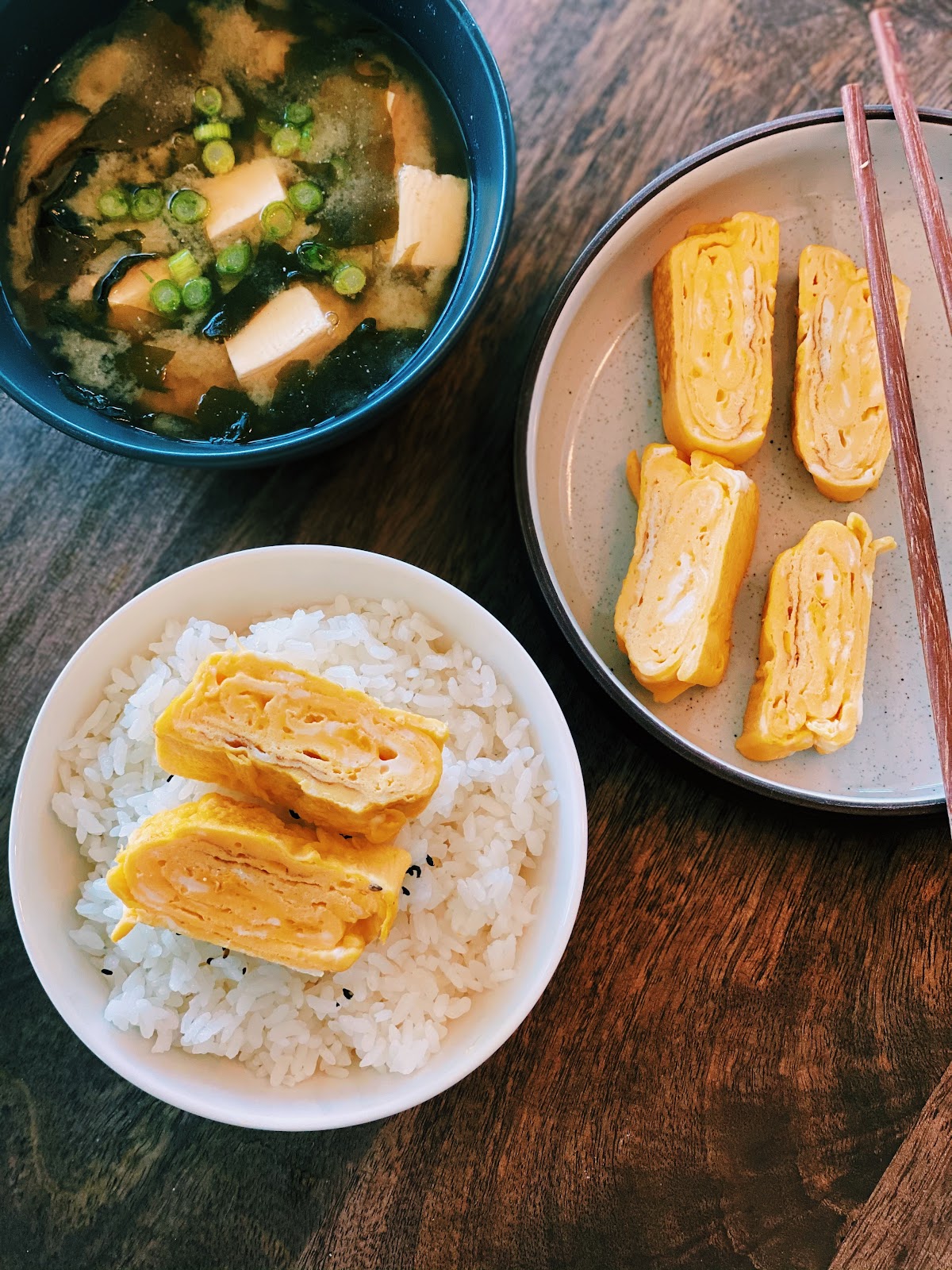
Japanese Tamagoyaki (Rolled Omelette) with Brown Rice & Miso Soup

~24g Protein ~4g Fiber
Ingredients
EggsDashi brothMirinSoy sauceBrown riceWhite misoWakameTofu
Steps
  1. 1Whisk 3 eggs with 2 tbsp dashi, 1 tsp mirin, 1 tsp soy sauce, and a pinch of sugar.
  2. 2Heat a tamagoyaki pan or small non-stick pan with a thin film of oil over medium.
  3. 3Pour ⅓ egg mixture in; when just set, roll toward you. Push roll back, add another ⅓, cook, roll again. Repeat.
  4. 4Shape in a bamboo mat while warm. Slice into rounds.
  5. 5Serve alongside warm brown rice and simple miso soup made with wakame and tofu.
Why it's great for PCOS: The rolled omelette technique creates multiple protein-rich layers that digest slowly. Pairing with miso soup doubles the probiotic and phytoestrogen benefit, supporting both gut and hormonal health simultaneously.
Inspired by Just One Cookbook
Chinese steamed egg silky ginger soy sesame Breakfast

Chinese Steamed Egg with Ginger, Soy & Sesame

~18g Protein ~1g Fiber
Ingredients
Eggs (3)Warm dashi or light brothFresh ginger (grated)Soy sauceSesame oilScallionsWhite pepper
Steps
  1. 1Beat eggs gently with chopsticks — avoid creating foam. Strain through a fine sieve for a silky texture.
  2. 2Mix in warm broth at a 1:1.5 egg-to-broth ratio. Add grated ginger and white pepper.
  3. 3Pour into a shallow bowl. Cover tightly with plastic wrap or a lid.
  4. 4Steam on low-medium heat for 12–14 minutes until just set — the center should still wobble slightly.
  5. 5Drizzle with soy sauce and sesame oil. Top with scallions and more grated ginger.
Why it's great for PCOS: This high-protein, low-carb breakfast is ideal for PCOS blood sugar management. Eggs provide complete protein and choline, which supports liver function and hormone clearance. Ginger contains gingerols that actively reduce inflammatory cytokines elevated in PCOS.
Inspired by Woks of Life
Korean egg rice bowl sunny side up kimchi sesame Breakfast

Korean Gyeran Bap (Egg Rice Bowl) with Kimchi & Sesame

~20g Protein ~3g Fiber
Ingredients
Brown riceEggs (2)KimchiSesame oilSoy sauceGochugaruScallionsSesame seedsNori strips
Steps
  1. 1Heat sesame oil in a small pan. Fry eggs over-medium — yolk should still be slightly runny.
  2. 2Warm brown rice in a bowl. Make a small well in the center.
  3. 3Drizzle rice with soy sauce, a few drops of sesame oil, and a pinch of gochugaru.
  4. 4Place fried eggs on top. Add a heap of kimchi alongside.
  5. 5Finish with sesame seeds, sliced scallions, and torn nori strips.
Why it's great for PCOS: Kimchi's live cultures support the gut microbiome, which plays a direct role in estrogen metabolism and androgen clearance in PCOS. Eggs deliver all nine essential amino acids plus vitamin D — a nutrient chronically deficient in PCOS that affects both mood and insulin regulation.
Inspired by Maangchi
Japanese ochazuke green tea poured over salmon rice Breakfast

Japanese Ochazuke (Green Tea Rice) with Salmon & Nori

~20g Protein ~4g Fiber
Ingredients
Brown riceHot green tea (sencha or hojicha)Salmon (grilled or canned)NoriShiso leaves or scallionsWasabi (small)Soy sauceSesame seeds
Steps
  1. 1Prepare a small bowl of warm brown rice.
  2. 2Flake grilled or canned salmon over the rice.
  3. 3Tear nori into pieces and scatter over the top. Add shiso leaves or sliced scallions.
  4. 4Brew a cup of strong green tea and pour it over the rice and toppings — the tea should just cover.
  5. 5Add a tiny dab of wasabi, a splash of soy sauce, and sesame seeds. Eat immediately.
Why it's great for PCOS: Sencha green tea provides EGCG, a catechin with documented ability to lower insulin levels and reduce testosterone — both central concerns in PCOS. This is one of the simplest yet most metabolically supportive breakfasts possible.
Inspired by Just One Cookbook
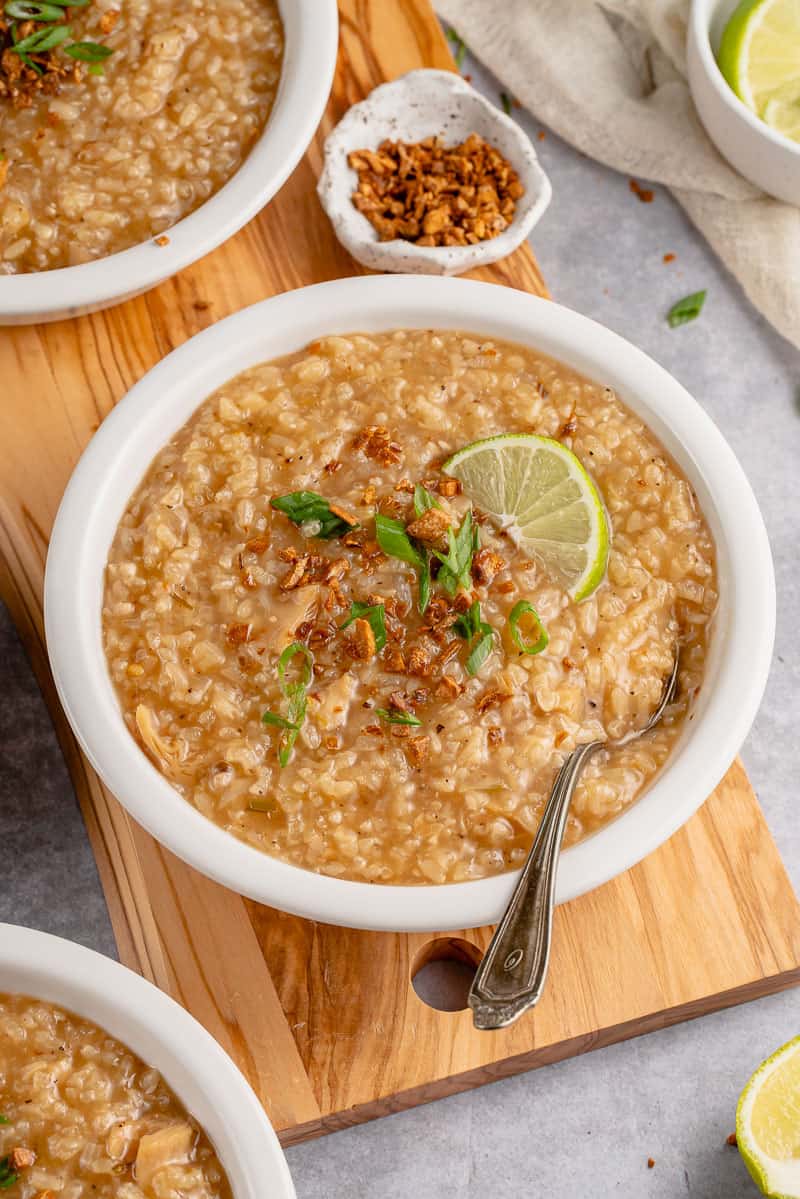
Filipino Lugaw Porridge Breakfast

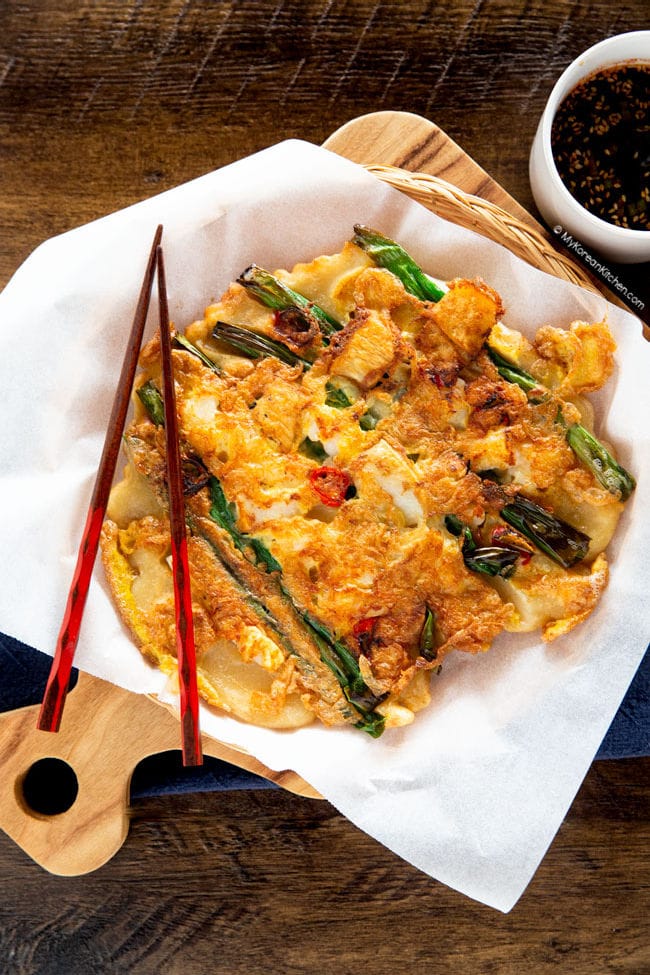
Filipino Lugaw with Soft Egg & Crispy Garlic

~18g Protein ~5g Fiber
Ingredients
Brown riceChicken brothGingerGarlicSoft-boiled eggFish sauceCalamansiScallionsToasted garlic chips
Steps
  1. 1Bring 5 cups chicken broth to a boil with generous sliced ginger.
  2. 2Add ½ cup brown rice. Reduce heat and simmer 40 minutes, stirring often, until very soft and porridge-like.
  3. 3Meanwhile, fry sliced garlic in oil until golden and crispy. Drain on paper towels.
  4. 4Season lugaw with fish sauce. Ladle into bowls.
  5. 5Top with halved soft-boiled egg, crispy garlic, scallions, and a squeeze of calamansi.
Why it's great for PCOS: Lugaw's generous ginger base delivers anti-inflammatory gingerols that help reduce the prostaglandin-driven cramps and inflammation common in PCOS. The soft egg adds choline and complete protein to start the day with stable energy.
Inspired by Panlasang Pinoy
Korean pajeon scallion shrimp pancake Breakfast

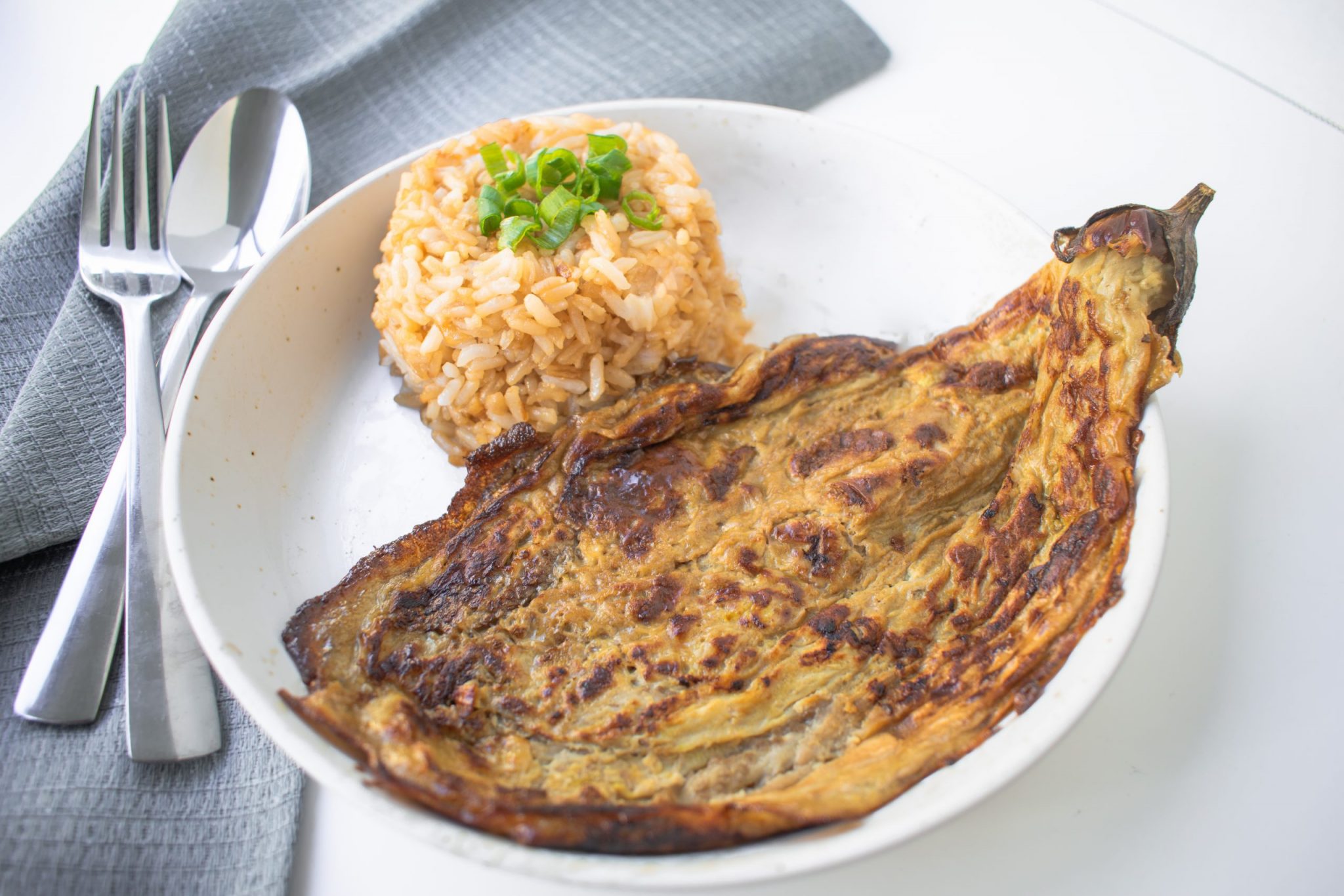
Korean Pajeon (Scallion & Shrimp Pancake)

~20g Protein ~4g Fiber
Ingredients
Scallions (generous)Shrimp (small, peeled)EggsBrown rice flourSesame oilTamariRice vinegarGochugaru (pinch)
Steps
  1. 1Make a simple dipping sauce: mix 2 tbsp tamari, 1 tbsp rice vinegar, a pinch of gochugaru, and a few drops of sesame oil. Set aside.
  2. 2Whisk 2 eggs with 3 tbsp brown rice flour, 2 tbsp water, and a pinch of salt to form a light batter.
  3. 3Cut scallions into 3-inch lengths. Lay flat in a non-stick pan with a thin layer of sesame oil.
  4. 4Scatter small shrimp over scallions. Pour batter evenly over everything. Press gently to flatten.
  5. 5Cook over medium heat 3–4 minutes until edges are set and golden. Flip carefully and cook 2–3 minutes more. Cut into squares and serve with dipping sauce.
Why it's great for PCOS: Brown rice flour keeps this gluten-free and lower glycemic than wheat-based pancakes, avoiding the blood sugar spike that worsens PCOS insulin resistance. Shrimp provide lean complete protein and iodine for thyroid support, while scallions are rich in quercetin, a flavonoid with anti-androgenic properties studied in PCOS.
Inspired by Maangchi
Filipino tortang talong eggplant omelette Breakfast

Filipino Tortang Talong (Eggplant Omelette)

~22g Protein ~6g Fiber
Ingredients
Japanese eggplantEggsGarlicOnionFish sauceGround black pepperCoconut oilBrown rice (side)
Steps
  1. 1Char whole eggplants directly over a gas flame or under a broiler, turning occasionally, until skin is blackened and flesh is soft, about 8–10 minutes.
  2. 2Let cool slightly, then peel carefully. Keep the stem intact — it acts as a handle.
  3. 3Beat 2 eggs with minced garlic, diced onion, a splash of fish sauce, and black pepper.
  4. 4Dip each peeled eggplant into the egg mixture, then place flat in a lightly oiled pan over medium heat. Spoon remaining egg over the top.
  5. 5Cook 3–4 minutes per side until egg is golden. Serve with a small portion of brown rice and a side of diced tomatoes.
Why it's great for PCOS: Tortang talong is a Filipino breakfast classic and a PCOS standout — eggplant is very low-glycemic and rich in nasunin, an antioxidant that protects ovarian cells from oxidative stress. Eggs provide choline and complete protein to support liver hormone clearance, while the minimal oil and lack of flour keeps this light and blood-sugar friendly.
Inspired by Panlasang Pinoy

Lunch

Korean bibimbap colorful vegetable rice bowl egg Lunch

Korean Bibimbap Bowl with Kimchi & Egg

~22g Protein ~8g Fiber
Ingredients
Brown riceEggKimchiSpinachCarrotsZucchiniGochujang (small)Sesame oilSesame seeds
Steps
  1. 1Cook ¾ cup brown rice. Sauté spinach with garlic in sesame oil; season with salt. Julienne carrots and zucchini and sauté separately until tender.
  2. 2Fry an egg sunny-side up.
  3. 3Arrange rice in a bowl and place spinach, carrots, zucchini, and kimchi in separate sections on top.
  4. 4Top with the fried egg and a small dollop of gochujang.
  5. 5Drizzle with sesame oil, sprinkle sesame seeds, and mix everything together before eating.
Why it's great for PCOS: Bibimbap is a nutritionist's dream for PCOS — diverse vegetables provide phytonutrients that support liver detoxification of excess hormones, kimchi's probiotics improve gut-hormone signaling, and brown rice provides slow-release energy without blood sugar spikes.
Inspired by Maangchi
Warm soba noodle bowl tofu miso broth Lunch

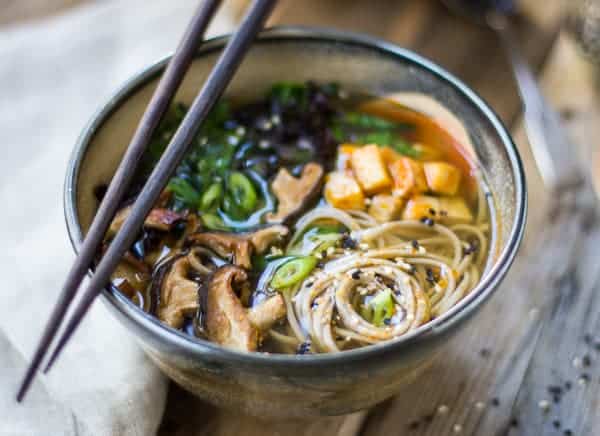
Warm Soba Noodle Bowl with Tofu & Miso Broth

~26g Protein ~9g Fiber
Ingredients
Soba noodles (100% buckwheat)Silken tofuShiitake mushroomsWhite miso pasteDashi brothTamariScallionsSesame seedsNori strips
Steps
  1. 1Cook soba noodles per package. Drain and set aside — do not rinse, so they stay warm.
  2. 2Heat dashi broth in a saucepan. Whisk in 1½ tbsp white miso and 1 tbsp tamari. Keep warm on low heat.
  3. 3Sauté sliced shiitake mushrooms in a little sesame oil until golden, about 4 minutes.
  4. 4Place noodles in bowls. Add cubed silken tofu and mushrooms.
  5. 5Ladle hot miso broth over everything. Top with scallions, sesame seeds, and nori strips.
Why it's great for PCOS: Buckwheat soba has a significantly lower GI than wheat noodles and is rich in rutin, a flavonoid shown to improve insulin sensitivity. Miso provides probiotics that support the gut-hormone axis, while shiitake mushrooms contribute beta-glucans that help regulate blood sugar — all core concerns in PCOS management.
Inspired by Just One Cookbook
Filipino salmon sinigang tamarind broth Lunch

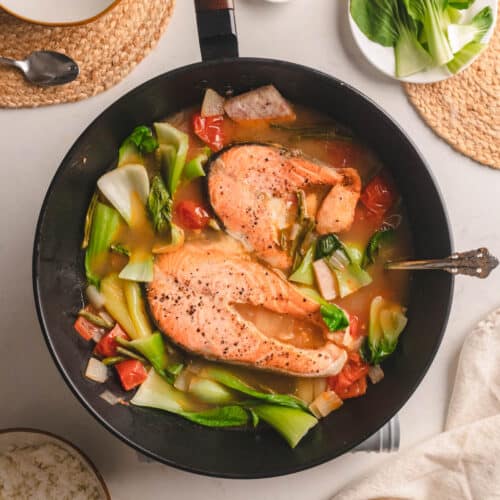
Filipino Salmon Sinigang

~28g Protein ~9g Fiber
Ingredients
Salmon filletBaby spinachDaikon radishTomatoesOnionTamarind pasteLong beansFish sauce
Steps
  1. 1In a pot, sauté onion and tomatoes until softened. Add 4 cups water and bring to a boil.
  2. 2Stir in 2 tbsp tamarind paste. Taste and adjust sourness.
  3. 3Add daikon radish and long beans. Simmer 8 minutes until tender.
  4. 4Add salmon fillets. Gently simmer 5–6 minutes until just cooked through.
  5. 5Stir in baby spinach, season with fish sauce and white pepper. Serve hot with brown rice.
Why it's great for PCOS: Tamarind is rich in tartaric acid and antioxidants that support liver detoxification, while salmon's omega-3s directly reduce the chronic inflammation linked to PCOS hormonal disruption.
Inspired by Panlasang Pinoy
Shrimp tofu rice paper rolls fresh Lunch

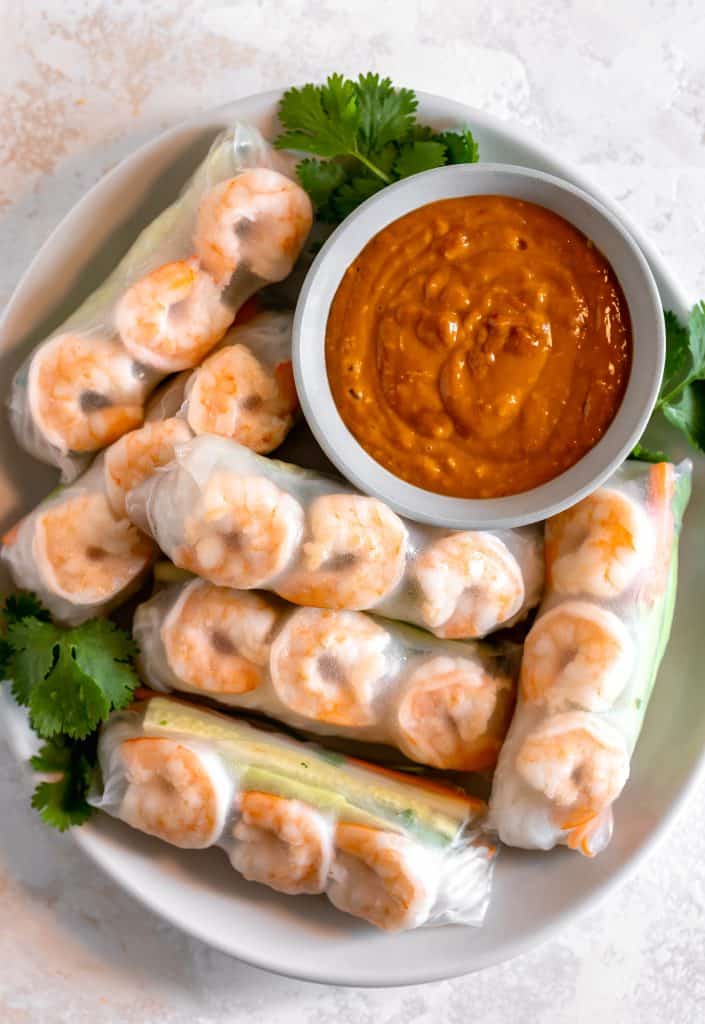
Shrimp & Tofu Rice Paper Rolls with Peanut Sauce

~26g Protein ~7g Fiber
Ingredients
Rice paperShrimpFirm tofuRice vermicelliLettuceCarrotsCucumberPeanut sauce
Steps
  1. 1Cook rice vermicelli per instructions, rinse cold, and set aside. Pan-fry sliced tofu until golden.
  2. 2Quickly sauté or poach shrimp until just pink, about 2 minutes. Cool slightly.
  3. 3Prepare fillings: julienne carrots and cucumber, wash and dry lettuce leaves.
  4. 4Dip one rice paper in warm water for 15 seconds. Lay flat. Arrange fillings and wrap tightly, folding in sides.
  5. 5Make peanut sauce: whisk 3 tbsp peanut butter, 1 tbsp hoisin, lime juice, warm water. Serve immediately.
Why it's great for PCOS: Loaded with vegetables and lean protein while staying low in refined carbs, these rolls support stable blood sugar. The diverse fresh vegetables provide phytonutrients with anti-inflammatory benefits important for PCOS.
Inspired by RecipeTin Eats
Korean kimchi bokkeumbap fried rice egg Lunch

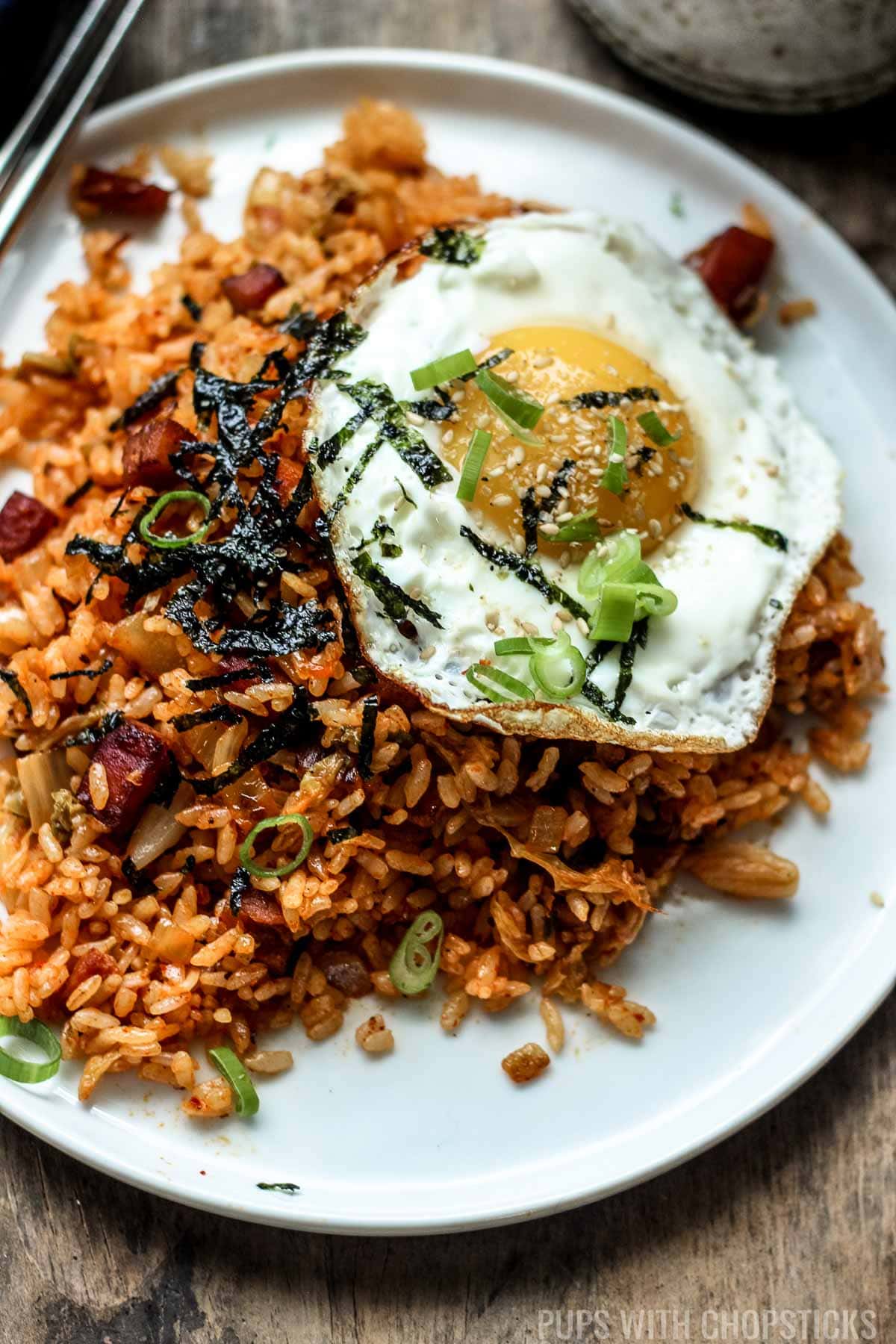
Korean Kimchi Bokkeumbap (Kimchi Fried Rice) with Egg

~22g Protein ~7g Fiber
Ingredients
Brown rice (day-old)KimchiEggsScallionsSesame oilTamariGochujang (small)Sesame seeds
Steps
  1. 1Chop kimchi roughly. Reserve the kimchi juice.
  2. 2Heat sesame oil in a wok on high heat. Add kimchi and stir-fry 2 minutes until fragrant and slightly caramelized.
  3. 3Add day-old brown rice and press down with a spatula. Let it char slightly, then toss and repeat.
  4. 4Add a splash of tamari and reserved kimchi juice. Toss everything together.
  5. 5Push rice to side of pan. Fry an egg to your preference in the center. Plate rice and top with egg, scallions, sesame seeds, and a small dab of gochujang.
Why it's great for PCOS: Day-old brown rice has higher resistant starch than fresh rice, slowing glucose digestion. Kimchi's fermentation compounds and probiotics actively support the gut-hormone axis, and its heat-activated beneficial compounds are amplified by stir-frying.
Inspired by Maangchi
Japanese tofu dengaku bowl brown rice edamame Lunch

Japanese Tofu Dengaku Bowl with Brown Rice & Edamame

~28g Protein ~10g Fiber
Ingredients
Firm tofuBrown riceEdamameWhite misoMirinSugarScallionsSesame seedsBok choy
Steps
  1. 1Press firm tofu between paper towels for 15 minutes. Cut into thick rectangles.
  2. 2Make dengaku miso glaze: combine 3 tbsp white miso, 1 tbsp mirin, 1 tsp sugar. Stir over low heat until smooth.
  3. 3Brush tofu generously with dengaku glaze on one side. Broil or grill 5–7 minutes until glaze caramelizes.
  4. 4Steam bok choy and blanch edamame. Season with a little sesame oil.
  5. 5Serve tofu over brown rice with bok choy and edamame. Finish with scallions and sesame seeds.
Why it's great for PCOS: White miso provides isoflavones that gently modulate estrogen activity — particularly beneficial for PCOS. The high-fiber brown rice and edamame combination delivers a slow, steady glucose release, supporting insulin stability throughout the afternoon.
Inspired by Just One Cookbook
Korean kongnamul guk soybean sprout soup Lunch

Korean Kongnamul Guk (Soybean Sprout Soup)

~18g Protein ~6g Fiber
Ingredients
Soybean sproutsSilken tofuDried anchovies (dashima broth)GarlicGochugaru (optional)Sesame oilScallionsTamariBrown rice (side)
Steps
  1. 1Simmer dried anchovies and dashima in 4 cups water for 10 minutes to make broth. Remove solids.
  2. 2Rinse soybean sprouts well. Add to broth with minced garlic. Bring to a boil — do not lift the lid for the first 3 minutes or the sprouts will smell.
  3. 3Reduce to a simmer and cook 5 more minutes until sprouts are tender but still have slight crunch.
  4. 4Add cubed silken tofu and a pinch of gochugaru if using. Simmer 2 minutes.
  5. 5Season with tamari and a few drops of sesame oil. Top with sliced scallions and serve with brown rice.
Why it's great for PCOS: Soybean sprouts are one of the most mineral-dense foods in Korean cuisine — rich in calcium, magnesium, and folate that support ovarian function. The phytoestrogens in soy help modulate the elevated androgen-to-estrogen ratio in PCOS, and the clean, low-calorie broth makes this easy on digestion and blood sugar.
Inspired by Maangchi
Filipino arroz caldo soft boiled egg ginger Lunch

Filipino Arroz Caldo with Soft-Boiled Egg & Ginger

~28g Protein ~5g Fiber
Ingredients
Chicken broth (store-bought or homemade)Short-grain brown riceGinger (generous)GarlicOnionFish sauceSoft-boiled eggsCalamansi
Steps
  1. 1Sauté sliced garlic until golden — remove half for garnish. Add onion and generous sliced ginger. Cook until softened.
  2. 2Add ¾ cup brown rice and stir to coat with the aromatics.
  3. 3Pour in 5 cups chicken broth and season with fish sauce. Bring to a boil.
  4. 4Reduce heat and simmer 35–40 minutes, stirring occasionally, until rice breaks down into a thick, creamy porridge.
  5. 5Ladle into bowls. Top with halved soft-boiled egg, crispy garlic, scallions, and a squeeze of calamansi.
Why it's great for PCOS: Ginger contains gingerols and shogaols that actively reduce prostaglandin-driven inflammation, contributing to painful PCOS-related menstrual symptoms. Brown rice provides steady energy without blood sugar spikes.
Inspired by Panlasang Pinoy
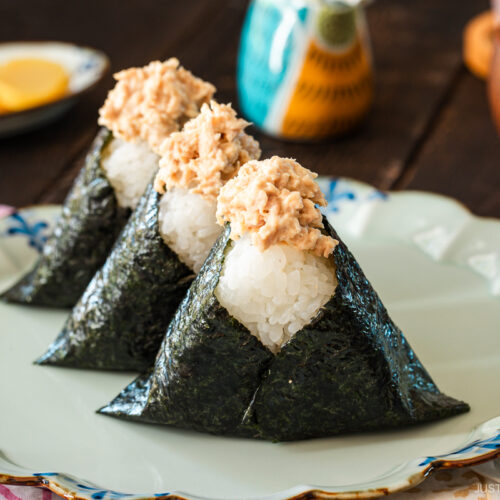
Japanese onigiri tuna mayo nori Lunch

Japanese Onigiri with Tuna & Pickled Daikon

~28g Protein ~6g Fiber
Ingredients
Brown rice (short-grain)Tuna (canned in water)Japanese mayo (small)Pickled daikonNoriSesame seedsCucumber
Steps
  1. 1Cook short-grain brown rice and let cool slightly — warm but handleable.
  2. 2Mix drained tuna with a small amount of Japanese mayo and a pinch of soy sauce.
  3. 3Wet hands with salted water. Place ¼ cup rice in palm, add tuna filling, shape into a triangle.
  4. 4Wrap each onigiri with a strip of nori and press sesame seeds onto the surface.
  5. 5Serve with thinly sliced cucumber and pickled daikon on the side.
Why it's great for PCOS: Tuna is exceptionally high in selenium, which supports thyroid function frequently disrupted in PCOS. Fermented pickled vegetables add probiotics, and brown rice provides slow-release energy for stable blood glucose.
Inspired by Just One Cookbook
Chinese steamed dumplings beef shiitake Lunch

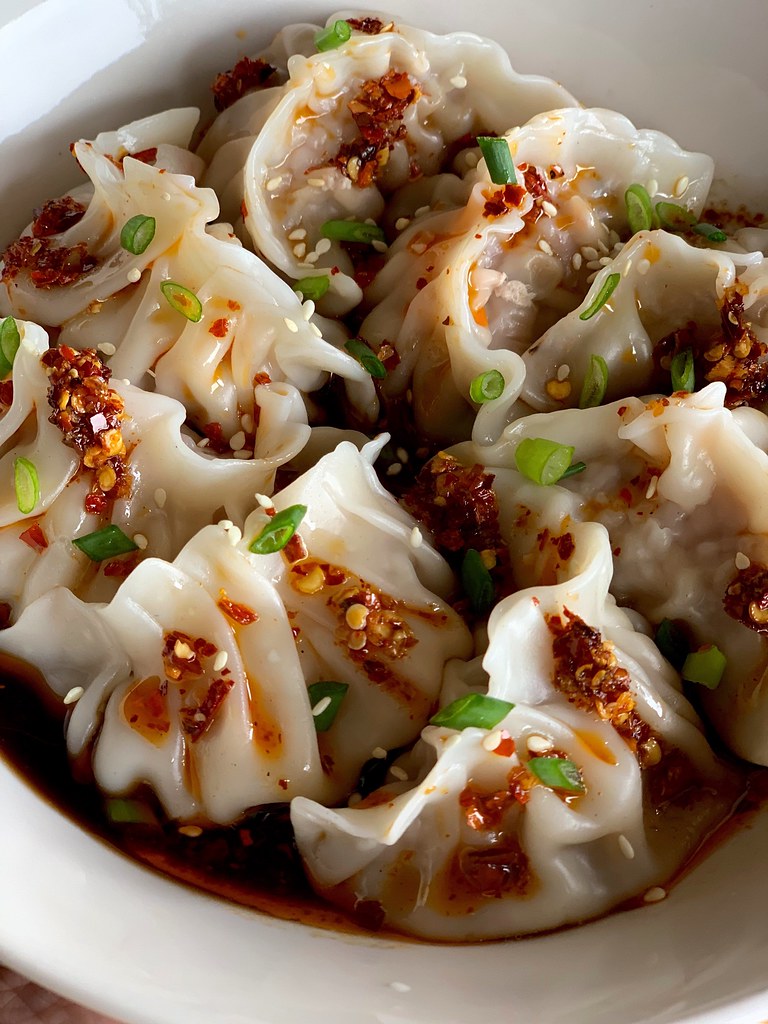
Chinese Steamed Dumplings with Beef & Shiitake

~26g Protein ~6g Fiber
Ingredients
Lean ground beefShiitake mushroomsNapa cabbageGingerScallionsTamariSesame oilWhole wheat dumpling wrappersRice vinegar
Steps
  1. 1Finely chop napa cabbage and shiitake mushrooms; salt the cabbage lightly and squeeze out excess water after 5 minutes.
  2. 2Mix lean ground beef with cabbage, mushrooms, minced ginger, scallions, 2 tbsp tamari, and 1 tsp sesame oil until well combined.
  3. 3Place a rounded teaspoon of filling in the center of each wrapper. Fold and pleat edges firmly to seal.
  4. 4Steam dumplings over boiling water 10–12 minutes until wrappers turn translucent and filling is cooked through.
  5. 5Serve with a dipping sauce of rice vinegar, tamari, a few drops of sesame oil, and sliced fresh ginger.
Why it's great for PCOS: Lean beef provides heme iron and zinc — two minerals commonly depleted in PCOS and essential for ovulation regularity. Shiitake mushrooms add beta-glucans that improve insulin sensitivity, while napa cabbage brings cruciferous indole-3-carbinol to support estrogen metabolism. Whole wheat wrappers lower the glycemic impact versus traditional wrappers.
Inspired by Woks of Life
Korean japchae glass noodles vegetables beef Lunch

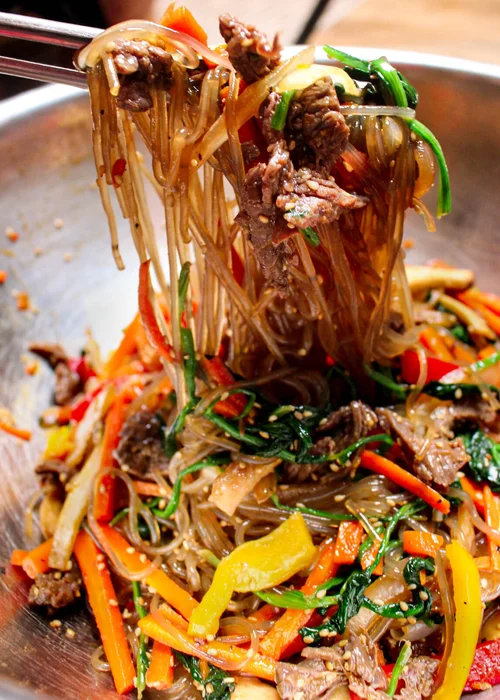
Korean Japchae (Glass Noodles) with Vegetables & Beef

~28g Protein ~7g Fiber
Ingredients
Sweet potato glass noodlesLean beef sirloinSpinachShiitake mushroomsCarrotsBell peppersTamariSesame oil
Steps
  1. 1Soak and boil sweet potato noodles 6 minutes. Drain and cut into manageable lengths.
  2. 2Marinate thinly sliced beef in tamari, sesame oil, and a touch of honey. Pan-fry until just cooked.
  3. 3Sauté each vegetable separately — spinach, mushrooms, carrots, and peppers — with a pinch of salt.
  4. 4Combine noodles, beef, and vegetables in a large pan. Toss with 3 tbsp tamari and 2 tsp sesame oil.
  5. 5Serve warm or at room temperature, topped with sesame seeds and sliced scallions.
Why it's great for PCOS: Sweet potato glass noodles are naturally gluten-free and lower GI than wheat noodles. Combined with diverse vegetables and lean protein, japchae provides a balanced macronutrient profile that supports stable blood sugar in PCOS.
Inspired by Maangchi
Chinese egg drop soup tofu bok choy Lunch

Chinese Egg Drop Soup with Tofu & Bok Choy

~18g Protein ~5g Fiber
Ingredients
EggsSilken tofuBaby bok choyChicken brothGingerTamariCornstarch (small)Scallions
Steps
  1. 1Bring 4 cups chicken broth to a boil with sliced ginger. Season with tamari and white pepper.
  2. 2Add cubed silken tofu and sliced bok choy. Simmer 3 minutes.
  3. 3Mix 1 tsp cornstarch with 2 tbsp cold water. Stir into simmering soup to slightly thicken.
  4. 4Beat 2 eggs in a small bowl. Slowly drizzle into the gently simmering soup while stirring in circles.
  5. 5Remove from heat. Top with scallions and a drop of sesame oil.
Why it's great for PCOS: This light, protein-rich soup is very low in carbohydrates, making it ideal for PCOS blood sugar management. Bok choy provides calcium and vitamin K, nutrients that support bone density often affected by hormonal imbalances in PCOS.
Inspired by Woks of Life
Japanese sticky miso salmon bowl rice Lunch

Japanese Sticky Miso Salmon Bowl

~36g Protein ~6g Fiber
Ingredients
Salmon filletBrown riceTamariMirinBroccoliEdamamePickled gingerSesame seeds
Steps
  1. 1Make teriyaki glaze: simmer 3 tbsp tamari, 2 tbsp mirin, and 1 tsp honey until slightly thickened.
  2. 2Sear salmon skin-side up for 3 minutes, flip, brush with glaze, and cook 4 more minutes.
  3. 3Blanch broccoli and edamame until just tender.
  4. 4Build bowl: brown rice base, then salmon, broccoli, and edamame arranged separately.
  5. 5Drizzle extra glaze over salmon. Top with pickled ginger and sesame seeds.
Why it's great for PCOS: Salmon's omega-3 fatty acids directly reduce PCOS-related inflammation and have been shown to lower androgen levels. Edamame adds plant isoflavones that support estrogen balance, making this bowl a hormonal powerhouse.
Inspired by Just One Cookbook
Korean bibim guksu spicy cold noodles cucumber egg Lunch

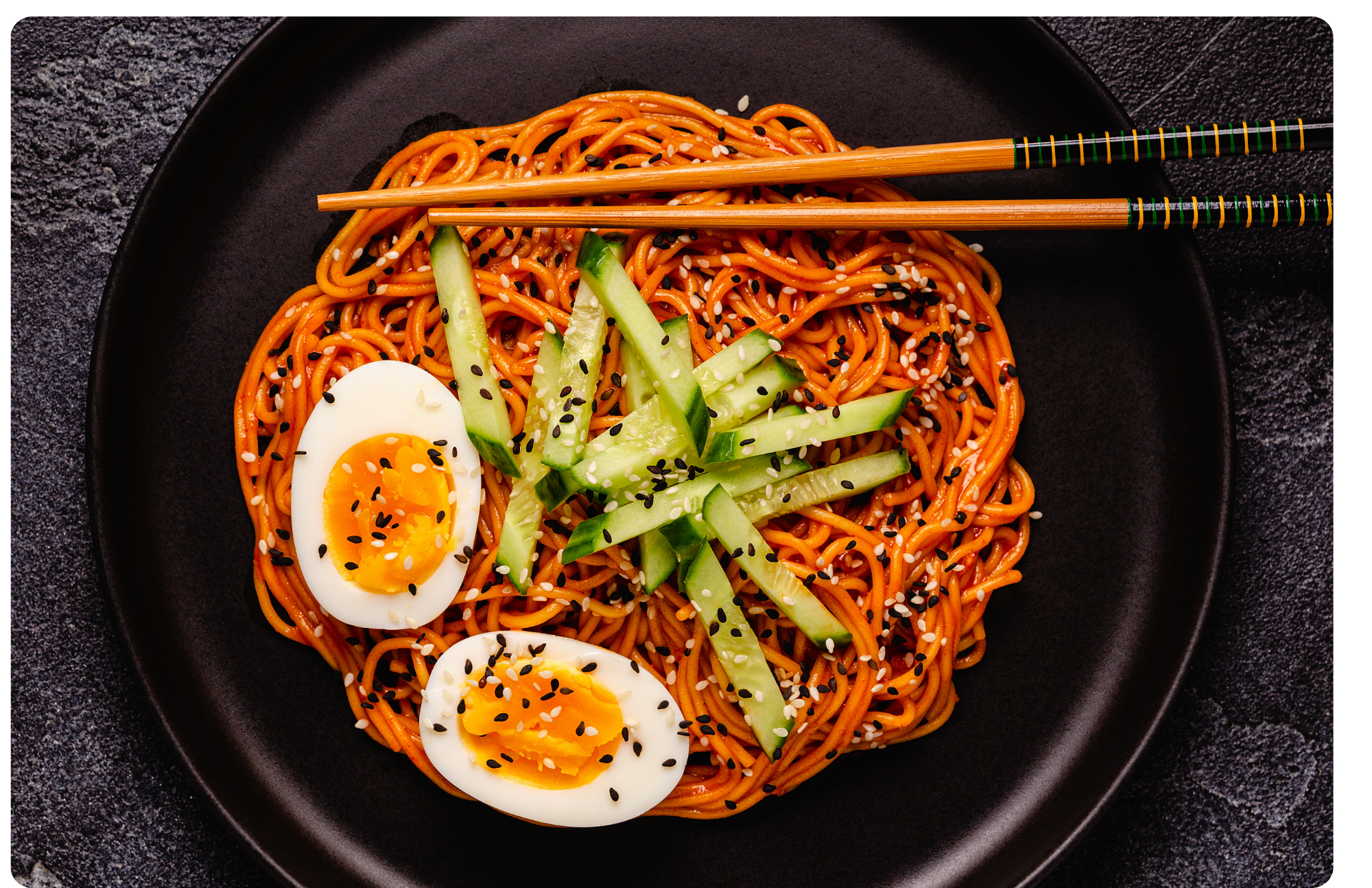
Korean Bibim Guksu (Spicy Cold Noodles) with Cucumber & Egg

~20g Protein ~7g Fiber
Ingredients
Soba or thin buckwheat noodlesGochujangRice vinegarSesame oilCucumberCarrotsSoft-boiled eggSesame seeds
Steps
  1. 1Cook noodles per package. Rinse thoroughly under cold water until very cold.
  2. 2Make sauce: mix 2 tbsp gochujang, 2 tbsp rice vinegar, 1 tbsp sesame oil, 1 tsp honey, 1 tsp tamari.
  3. 3Julienne cucumber and carrots.
  4. 4Toss cold noodles in the sauce. Add cucumber and carrots and toss to combine.
  5. 5Top with halved soft-boiled egg, sesame seeds, and extra scallions.
Why it's great for PCOS: Buckwheat noodles have significantly lower GI than wheat noodles, and gochujang's capsaicin compounds have been shown to improve insulin sensitivity — a fundamental metabolic target in PCOS management.
Inspired by Maangchi
Filipino chicken sopas macaroni soup Lunch

Filipino Chicken Sopas (Macaroni Soup)

~26g Protein ~5g Fiber
Ingredients
Chicken breastWhole wheat elbow pastaCabbageCarrotsCeleryEvaporated skim milkGarlicOnion
Steps
  1. 1Sauté garlic and onion in a pot until soft. Add diced chicken breast and cook until lightly browned.
  2. 2Add carrots and celery. Pour in 4 cups chicken broth. Bring to a boil.
  3. 3Add whole wheat elbow pasta. Cook until pasta is al dente, about 10 minutes.
  4. 4Add shredded cabbage and a splash of evaporated skim milk for creaminess. Simmer 3 minutes.
  5. 5Season with salt, white pepper, and fish sauce. Serve hot.
Why it's great for PCOS: The combination of lean chicken protein, complex carbs from whole wheat pasta, and fiber-rich vegetables creates a balanced, satisfying meal that maintains steady blood glucose — the foundation of PCOS dietary management.
Inspired by Panlasang Pinoy
Chinese braised tofu bok choy mushrooms Lunch

Chinese Braised Tofu with Bok Choy & Mushrooms

~20g Protein ~7g Fiber
Ingredients
Firm tofuBaby bok choyShiitake mushroomsOyster sauceTamariGingerGarlicSesame oil
Steps
  1. 1Press tofu firmly and cut into large cubes. Pan-fry in a little oil until golden on two sides.
  2. 2Remove tofu. In same pan, sauté minced ginger and garlic 30 seconds.
  3. 3Add halved shiitake mushrooms. Cook 3 minutes.
  4. 4Add ½ cup broth, 1 tbsp oyster sauce, and 1 tbsp tamari. Nestle tofu back in.
  5. 5Add bok choy, cover, and braise 4 minutes until bok choy is tender. Finish with sesame oil.
Why it's great for PCOS: Braising tofu in umami-rich sauce without deep frying keeps this dish anti-inflammatory. Shiitake mushrooms contain eritadenine, a compound that supports cholesterol management — often elevated in PCOS due to insulin resistance.
Inspired by Woks of Life
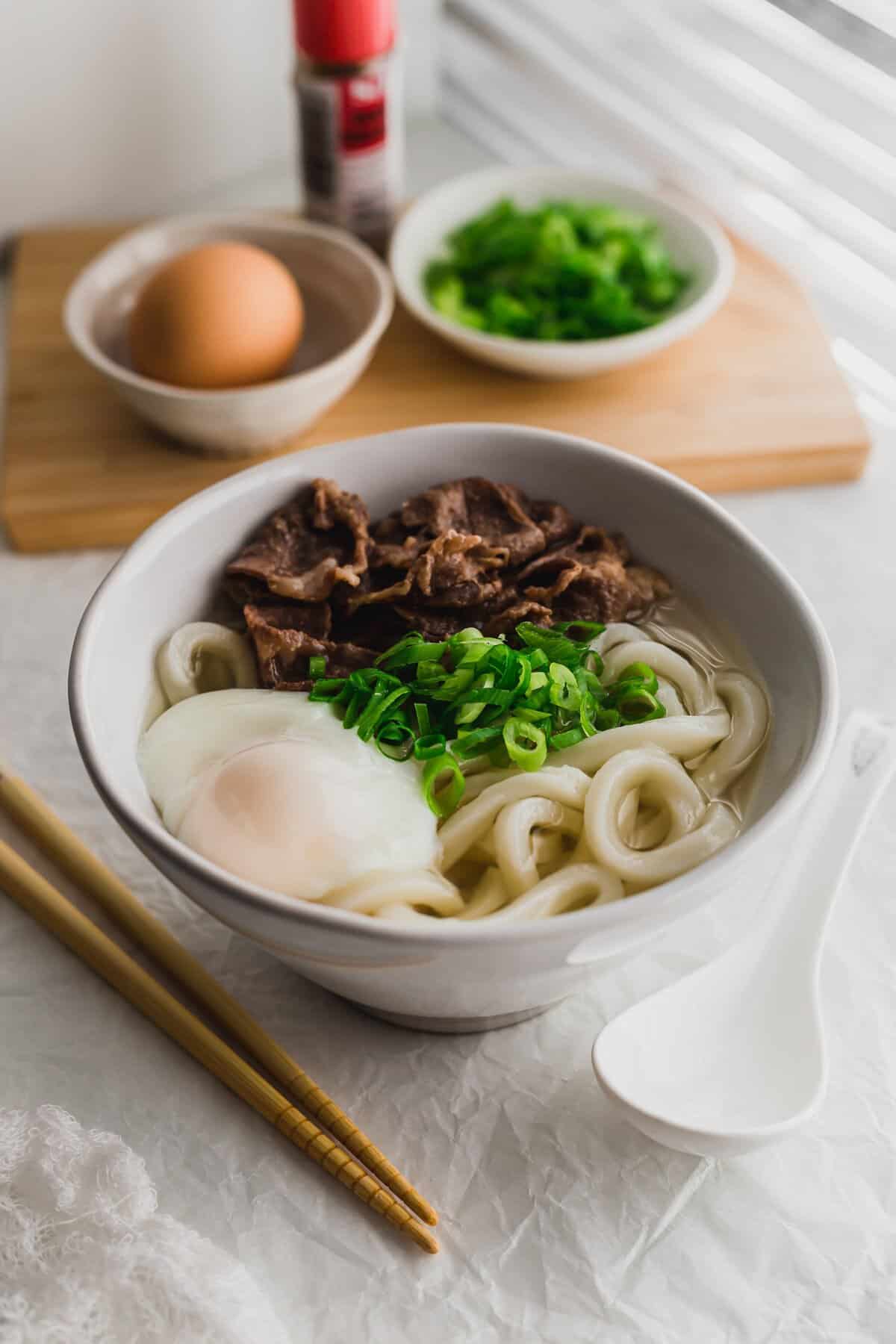
Japanese udon soup tofu bok choy soft egg Lunch

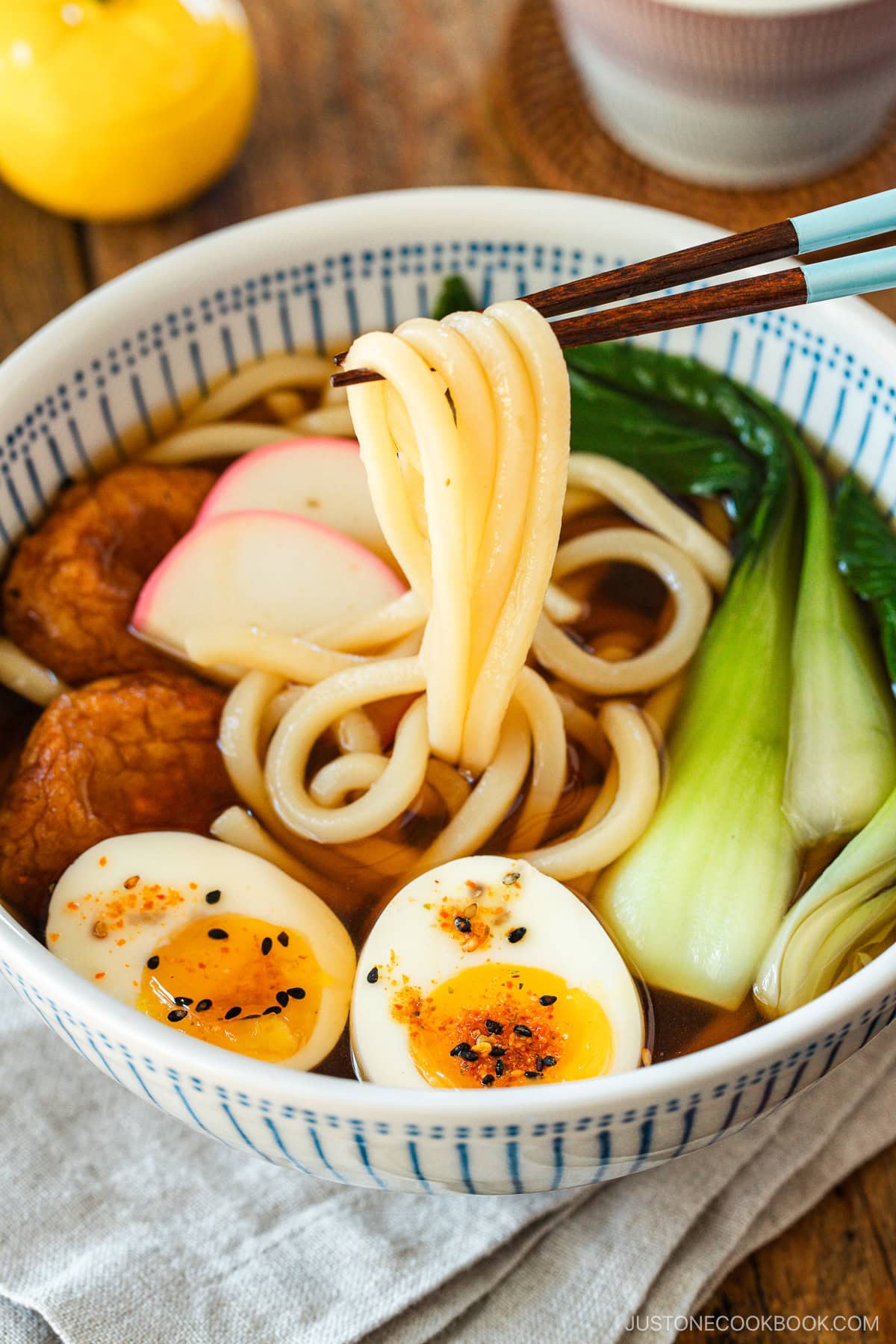
Japanese Udon Soup with Tofu, Bok Choy & Soft Egg

~30g Protein ~5g Fiber
Ingredients
Whole wheat udon noodlesFirm tofuBaby bok choySoft-boiled eggKombu dashiMirinTamariNoriScallions
Steps
  1. 1Simmer kombu dashi with 2 tbsp mirin and 2 tbsp tamari for the broth base. Taste and adjust.
  2. 2Press and cube firm tofu. Pan-fry in a little sesame oil until golden on two sides, about 3 minutes per side.
  3. 3Cook whole wheat udon noodles per package. Drain and place in bowls.
  4. 4Add halved bok choy to the hot broth and simmer 2 minutes until tender-crisp.
  5. 5Ladle broth and bok choy over noodles. Top with tofu, halved soft-boiled egg, nori strip, and scallions. Serve immediately.
Why it's great for PCOS: Kombu dashi is exceptionally rich in iodine and glutamates that support thyroid and metabolic function impaired in PCOS. Whole wheat udon provides more fiber than white udon, slowing glucose absorption.
Inspired by Just One Cookbook
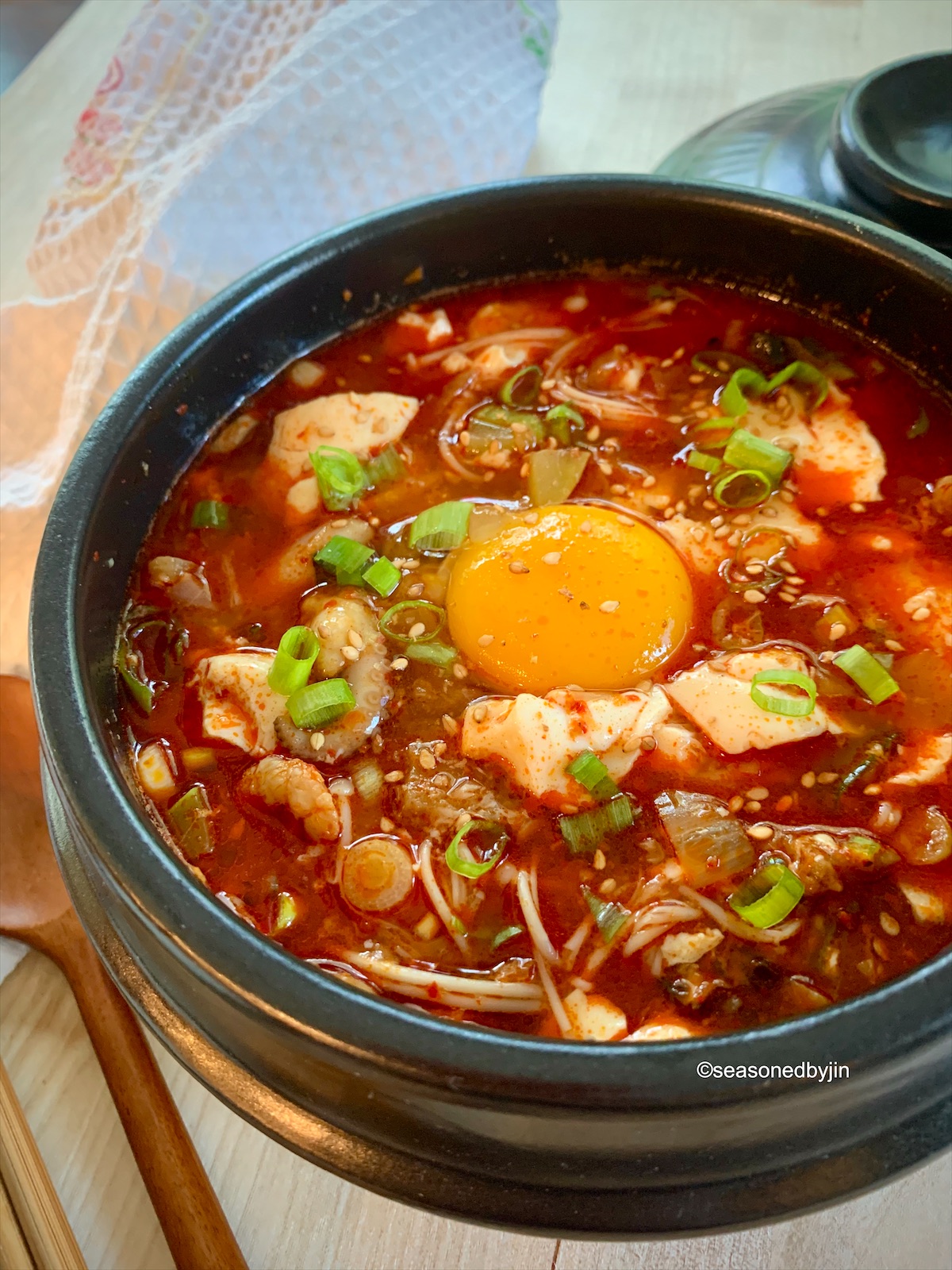
Korean sundubu jjigae soft tofu stew shrimp Lunch

Korean Sundubu-jjigae (Soft Tofu Stew) with Shrimp

~24g Protein ~5g Fiber
Ingredients
Silken soft tofuShrimpKimchiGochugaruGarlicSesame oilEggScallionsAnchovy broth
Steps
  1. 1Heat sesame oil in a small stone pot or saucepan. Add minced garlic and cook 30 seconds.
  2. 2Add chopped kimchi and gochugaru. Stir-fry 2 minutes until fragrant.
  3. 3Pour in 1½ cups anchovy broth. Bring to a boil.
  4. 4Spoon in silken tofu in large chunks. Add shrimp. Simmer 4 minutes.
  5. 5Crack one egg directly into the stew. Cook until white is just set. Top with scallions and serve sizzling.
Why it's great for PCOS: Silken tofu provides complete protein and isoflavones in a highly bioavailable form. Kimchi and gochugaru together deliver probiotics and metabolism-boosting capsaicin, addressing two core PCOS concerns simultaneously.
Inspired by Maangchi
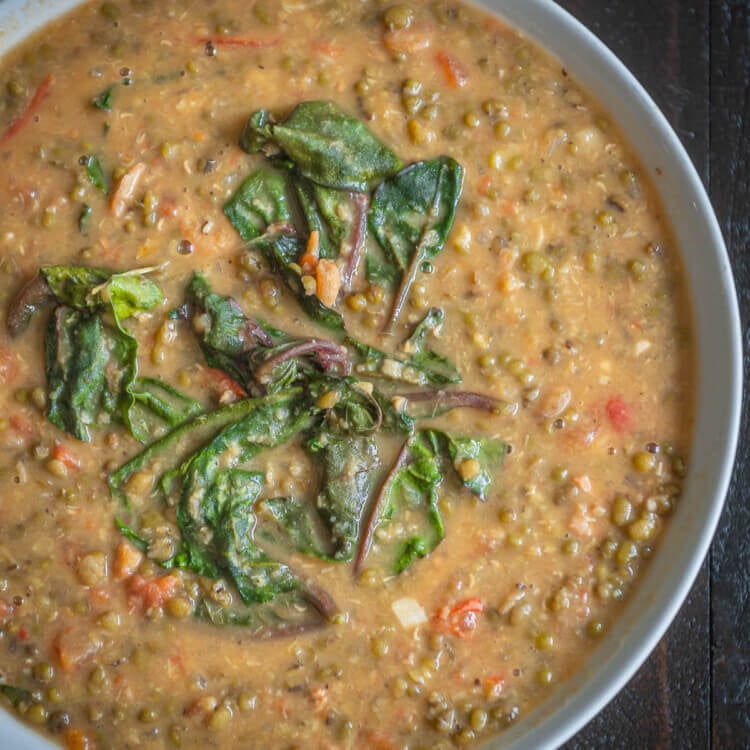
Filipino ginisang monggo mung bean stew tofu Lunch

Filipino Ginisang Monggo (Mung Bean Stew) with Tofu

~22g Protein ~15g Fiber
Ingredients
Split mung beans (monggo)ShrimpGarlicOnionTomatoesSpinach or malunggayFish sauceCoconut aminosBagoong (small side)
Steps
  1. 1Boil split mung beans in 4 cups water until very soft, about 25–30 minutes. They should be fully broken down.
  2. 2In a separate pan, sauté garlic, onion, and tomatoes until the tomatoes collapse into a sauce.
  3. 3Add the sautéed mixture to the mung bean pot. Stir together.
  4. 4Add shrimp and cook 2–3 minutes until pink.
  5. 5Stir in spinach or malunggay. Season with fish sauce and coconut aminos. Serve over brown rice with a small side of bagoong.
Why it's great for PCOS: Mung beans have one of the highest fiber-to-protein ratios of any legume, making ginisang monggo exceptional for PCOS blood sugar control. Their soluble fiber slows glucose absorption, while plant-based estrogen compounds gently support hormone balance.
Inspired by Panlasang Pinoy
Chinese congee shrimp ginger Lunch

Chinese Congee with Shrimp & Ginger

~26g Protein ~4g Fiber
Ingredients
Brown riceShrimp (fresh or frozen)Ginger (generous)ScallionsWhite pepperSesame oilCentury egg (optional)Soy sauce
Steps
  1. 1Rinse ½ cup brown rice and simmer in 5 cups water or light broth for 45–55 minutes, stirring occasionally, until creamy.
  2. 2Peel and devein shrimp. Marinate briefly in a pinch of salt, white pepper, and grated ginger.
  3. 3Add shrimp to congee in the last 4 minutes of cooking — they cook quickly and should be just pink and curled.
  4. 4Season with soy sauce, white pepper, and a drizzle of sesame oil.
  5. 5Serve topped with julienned ginger, sliced scallions, and optional century egg slices.
Why it's great for PCOS: Shrimp are exceptionally lean, high in iodine and zinc — both minerals that directly support thyroid function and progesterone production in women with PCOS. Ginger's anti-inflammatory gingerols help reduce the chronic low-grade inflammation driving PCOS symptoms, while the warm congee base is deeply nourishing and easy to digest.
Inspired by Woks of Life
Japanese nabeyaki udon beef egg hot pot Lunch

Japanese Nabeyaki Udon (Hot Noodle Pot) with Beef & Egg

~22g Protein ~6g Fiber
Ingredients
Thick udon noodlesThinly sliced beef (shabu cut)Shiitake mushroomsEggFish cake (optional)Dashi brothMirin & soy sauceNori
Steps
  1. 1Bring dashi broth to a simmer with mirin and soy sauce. Taste and adjust seasoning.
  2. 2Cook thick udon noodles per package. Transfer directly into individual clay pots or oven-safe bowls.
  3. 3Pour hot broth over noodles. Add thinly sliced beef, sliced shiitake mushrooms, and fish cake if using.
  4. 4Crack one egg directly into the center of each pot. Cover and simmer on low for 3–4 minutes until white is just set.
  5. 5Top with nori strips and serve immediately — the pot should still be bubbling at the table.
Why it's great for PCOS: Nabeyaki udon is a deeply warming, nutrient-dense hot pot — silken tofu provides isoflavones that support estrogen-androgen balance, while dashi broth delivers iodine for thyroid support. The egg adds complete protein and choline for liver hormone clearance.
Inspired by Just One Cookbook

Dinner

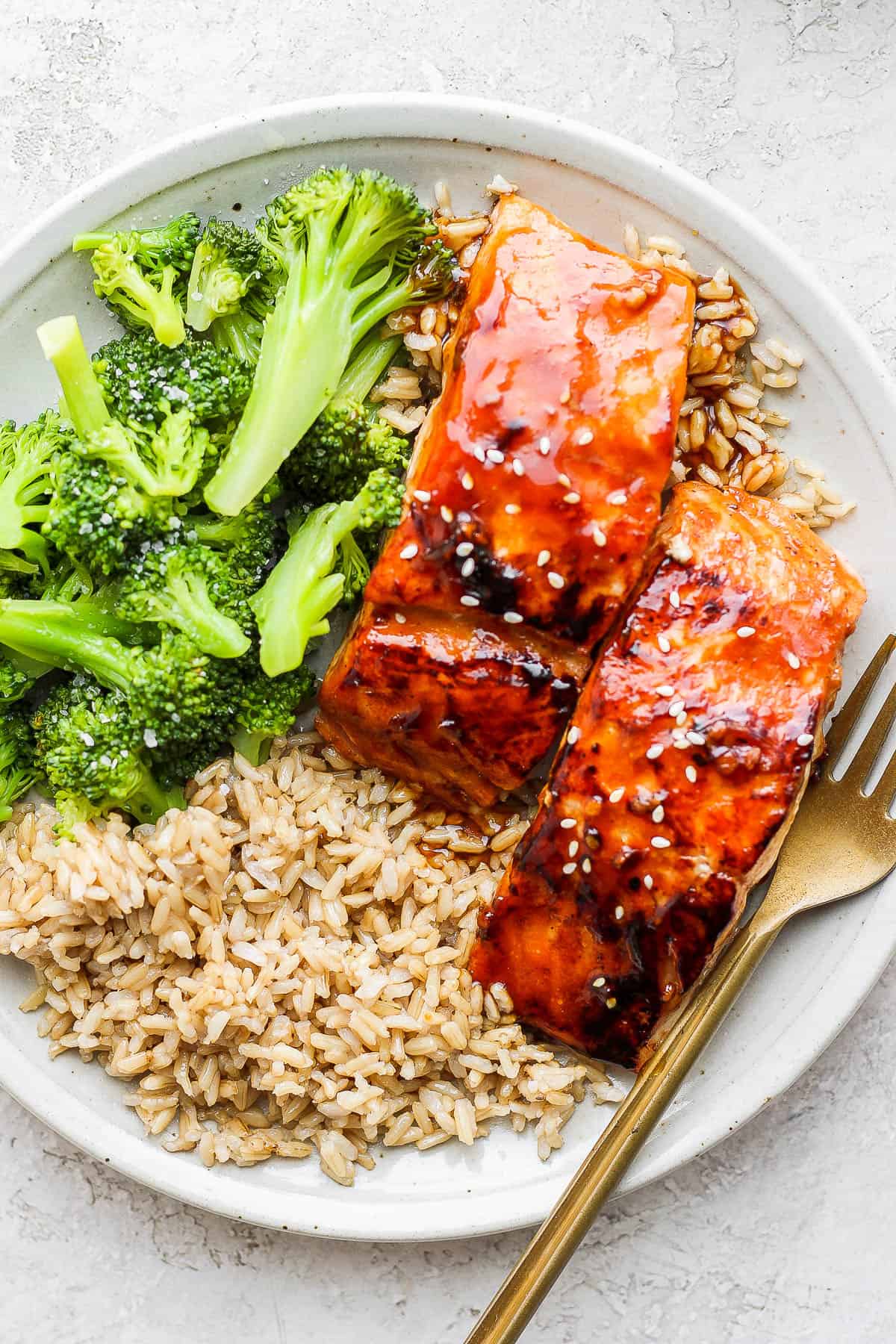
Salmon teriyaki roasted broccolini brown rice Dinner

Salmon Teriyaki with Roasted Broccolini & Brown Rice

~38g Protein ~7g Fiber
Ingredients
Salmon filletShort-grain brown riceBroccoliniTamariMirinHoneySesame seeds
Steps
  1. 1Make teriyaki sauce: whisk 3 tbsp tamari, 2 tbsp mirin, 1 tsp honey, and 1 tsp grated ginger. Simmer until slightly thickened.
  2. 2Toss broccolini with olive oil, salt, and garlic. Roast at 425°F (220°C) for 15 minutes.
  3. 3Sear salmon, skin-side up, in an oven-safe pan for 3 minutes. Flip and brush with teriyaki sauce.
  4. 4Transfer pan to oven and cook 7–9 minutes until salmon flakes easily.
  5. 5Serve over steamed brown rice with broccolini. Drizzle extra sauce and sprinkle sesame seeds.
Why it's great for PCOS: Salmon's omega-3 fatty acids directly combat PCOS-related inflammation and have been shown to reduce androgen levels, while cauliflower rice keeps the meal low-glycemic.
Inspired by Just One Cookbook
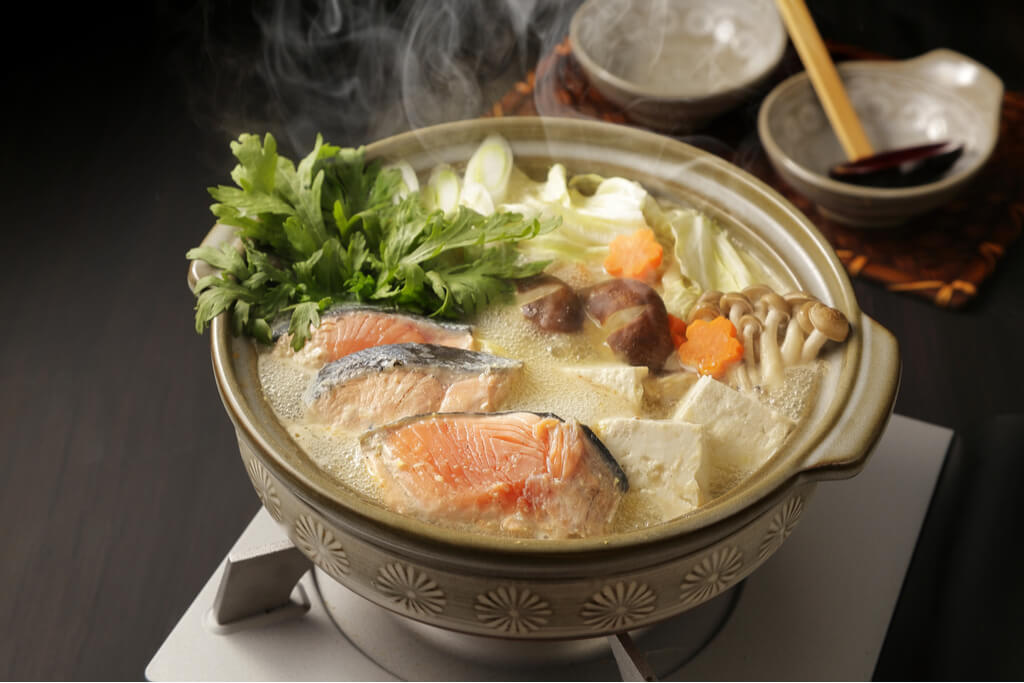
Japanese ishikari nabe salmon miso hot pot Dinner

Japanese Ishikari Nabe (Salmon Miso Hot Pot)

~34g Protein ~8g Fiber
Ingredients
Salmon fillet (chunked)White & red misoFirm tofuNapa cabbageShiitake mushroomsDaikonDashi brothButter (small knob)Scallions
Steps
  1. 1Bring dashi broth to a gentle simmer. Whisk in 2 tbsp white miso and 1 tbsp red miso until dissolved.
  2. 2Add sliced daikon and shiitake mushrooms. Simmer 8 minutes until daikon is just tender.
  3. 3Add napa cabbage wedges and firm tofu chunks. Simmer 3 minutes.
  4. 4Nestle salmon chunks into the broth. Cover and cook 4–5 minutes until salmon is just cooked through.
  5. 5Finish with a small knob of butter stirred in for richness (classic Ishikari style). Top with scallions and serve directly from the pot with brown rice on the side.
Why it's great for PCOS: Ishikari Nabe is Hokkaido's signature dish — a deeply warming miso hot pot where salmon's omega-3s directly reduce PCOS-related inflammation and androgen levels. Miso provides fermented isoflavones for hormonal balance, daikon supports liver detoxification of excess estrogens, and the warming broth makes this one of the most nourishing meals in this collection.
Inspired by Just One Cookbook
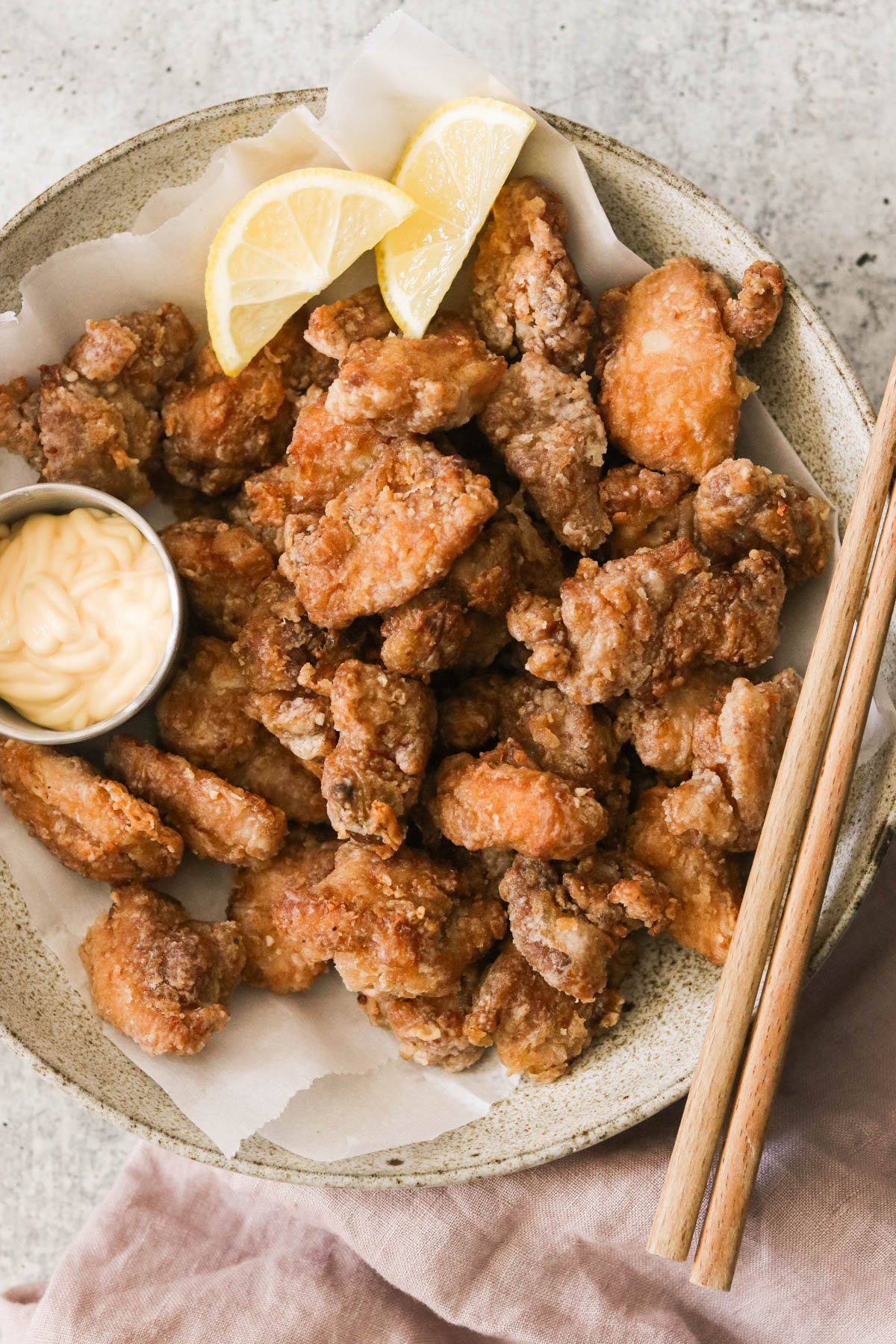
Japanese karaage crispy fried chicken ponzu slaw Dinner

Japanese Karaage (Crispy Fried Chicken) with Ponzu Slaw

~38g Protein ~5g Fiber
Ingredients
Boneless chicken thighsTamariSake or dry sherryGingerGarlicPotato starch or cornstarchCabbage (shredded)Ponzu sauceSesame oilLemon wedge
Steps
  1. 1Cut chicken thighs into bite-sized pieces. Marinate in 2 tbsp tamari, 1 tbsp sake, 1 tsp grated ginger, and 2 minced garlic cloves for at least 20 minutes.
  2. 2Drain excess marinade. Toss chicken in potato starch until evenly coated — this is what makes karaage extra crispy.
  3. 3Heat 1 inch of neutral oil in a heavy pan to 340°F (170°C). Fry chicken in batches 4 minutes, then remove. Increase oil to 375°F (190°C) and fry again 1–2 minutes for maximum crispiness.
  4. 4Toss shredded cabbage with 2 tbsp ponzu, a few drops of sesame oil, and a pinch of sesame seeds for the slaw.
  5. 5Serve karaage immediately over the ponzu slaw with a wedge of lemon. Eat while hot and crispy.
Why it's great for PCOS: Chicken thighs are richer in zinc and B6 than breast meat — both nutrients directly involved in progesterone synthesis and hormonal regulation. Ponzu is a citrus-soy sauce that provides vitamin C and antioxidants, while the cabbage slaw adds indole-3-carbinol that supports liver estrogen metabolism. Using potato starch instead of wheat flour makes this lower-gluten and gentler on blood sugar than traditional fried chicken.
Inspired by Just One Cookbook
Japanese yaki udon stir fried beef vegetables noodles Dinner

Japanese Yaki Udon (Stir-Fried Udon with Beef & Vegetables)

~34g Protein ~6g Fiber
Ingredients
Thick udon noodlesThinly sliced beefBok choyShiitake mushroomsOnionTamariMirinSesame oilBonito flakes & nori (topping)
Steps
  1. 1Cook udon noodles per package, just until tender. Drain and toss with a little sesame oil to prevent sticking.
  2. 2Mix sauce: 2 tbsp tamari, 1 tbsp mirin, 1 tsp sesame oil. Set aside.
  3. 3Heat wok over high heat. Stir-fry thinly sliced beef 2 minutes until just browned. Remove and set aside.
  4. 4In the same wok, stir-fry sliced onion, shiitake mushrooms, and bok choy 3 minutes until tender-crisp.
  5. 5Add noodles and beef back to the wok. Pour sauce over and toss everything together over high heat 2 minutes until well coated and lightly charred. Top with bonito flakes and shredded nori.
Why it's great for PCOS: Yaki udon served with beef and vegetables is a complete, balanced meal — the thick udon noodles have a moderate GI that's further lowered by the protein and fiber from beef and bok choy. Shiitake mushrooms are rich in eritadenine, a compound shown to support healthy cholesterol metabolism disrupted by PCOS, and bonito flakes add a concentrated hit of iodine for thyroid support.
Inspired by Just One Cookbook
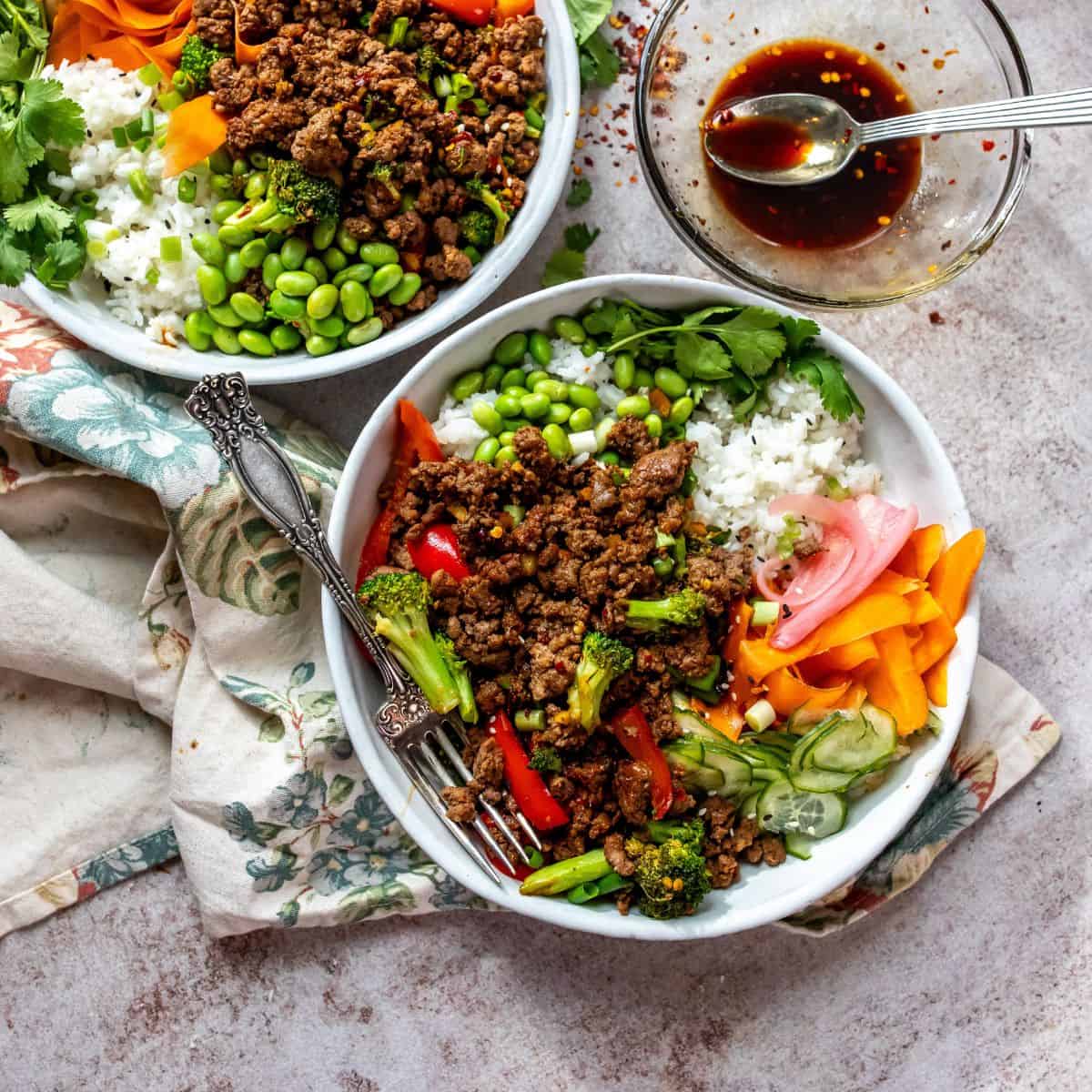
Korean beef bulgogi bowl kimchi slaw brown rice Dinner

Korean Beef Bulgogi Bowl with Kimchi Slaw & Brown Rice

~36g Protein ~9g Fiber
Ingredients
Lean beef sirloin (thinly sliced)Asian pearTamariSesame oilKimchiNapa cabbageBrown riceGochujang (small)
Steps
  1. 1Blend ½ Asian pear, 3 tbsp tamari, 1 tbsp sesame oil, 1 tsp honey, garlic, and ginger into marinade.
  2. 2Marinate thinly sliced sirloin at least 30 minutes.
  3. 3Cook beef in a very hot pan in a single layer — let it caramelize 1–2 min per side. Work in batches.
  4. 4Make kimchi slaw: thinly slice napa cabbage, toss with chopped kimchi, rice vinegar, and sesame seeds.
  5. 5Build bowls: brown rice, bulgogi beef, and kimchi slaw. Top with cucumber, carrots, and a drizzle of gochujang.
Why it's great for PCOS: Fermented kimchi actively supports the gut-hormone axis central to PCOS, and Asian pear in the marinade provides quercetin — an anti-inflammatory flavonoid. Lean sirloin delivers high protein with controlled saturated fat.
Inspired by Maangchi
Japanese miso glazed salmon rice donburi bowl Dinner

Japanese Miso Salmon Donburi with Pickled Cucumber

~36g Protein ~5g Fiber
Ingredients
Salmon filletWhite misoMirinSake or rice wineBrown riceCucumberRice vinegarSesame seedsNoriScallions
Steps
  1. 1Mix glaze: 2 tbsp white miso, 1 tbsp mirin, 1 tbsp sake. Spread over salmon. Marinate 20 minutes.
  2. 2Broil salmon 8–10 minutes until glaze is caramelized and fish flakes easily.
  3. 3Thinly slice cucumber. Toss with 1 tbsp rice vinegar, pinch of salt and sugar. Let sit 10 minutes.
  4. 4Assemble bowl: brown rice, flaked miso salmon, pickled cucumber.
  5. 5Top with sesame seeds, nori strips, and scallions.
Why it's great for PCOS: Miso provides beneficial fermentation compounds and plant-based isoflavones that support estrogen metabolism. Salmon's omega-3 fatty acids (EPA and DHA) directly reduce the prostaglandin-driven inflammation that underlies many PCOS symptoms including irregular cycles.
Inspired by Just One Cookbook
Korean galbi jjim braised short rib daikon Dinner

Korean Galbi-Jjim Braised Short Rib with Daikon

~36g Protein ~7g Fiber
Ingredients
Beef short ribs (lean)Daikon radishCarrotsShiitake mushroomsAsian pearTamariGarlicSesame oil
Steps
  1. 1Blanch short ribs in boiling water 5 minutes. Rinse and set aside.
  2. 2Blend ½ Asian pear, garlic, 3 tbsp tamari, 1 tbsp sesame oil, and 1 tsp honey into marinade.
  3. 3In a heavy pot, combine ribs, marinade, daikon, and shiitake mushrooms. Add 1 cup water.
  4. 4Bring to a boil, then simmer covered on low 1 hour, turning ribs halfway.
  5. 5Add carrots in the last 15 minutes. Skim excess fat. Garnish with sesame seeds and scallions.
Why it's great for PCOS: The Asian pear acts as a natural tenderizer and provides quercetin, an anti-inflammatory flavonoid. Braising removes much of the saturated fat while daikon and mushrooms add fiber and immune-supporting compounds.
Inspired by Maangchi
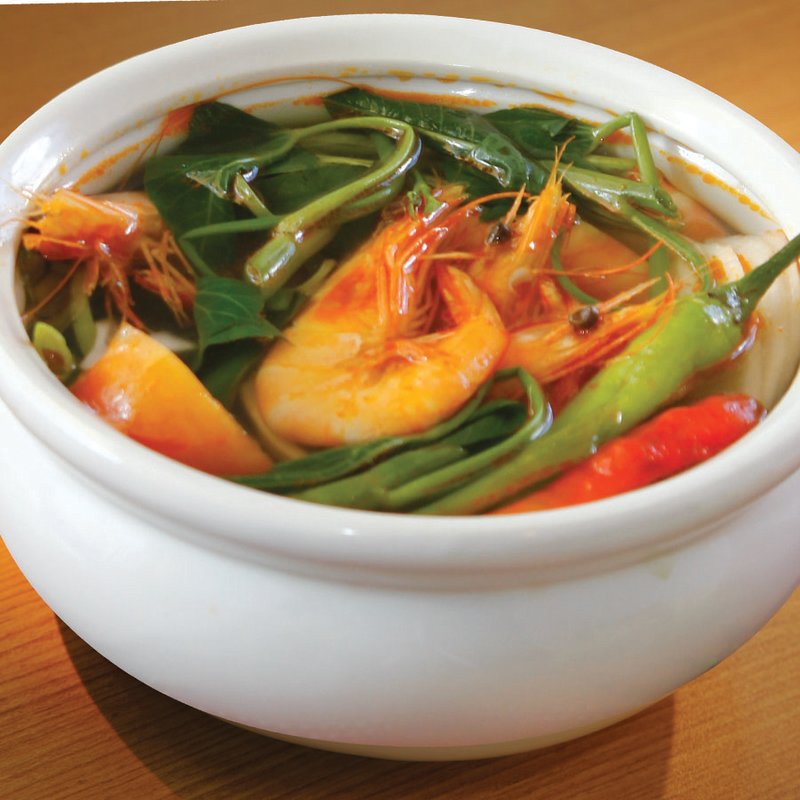
Filipino sinigang na hipon shrimp tamarind broth Dinner

Filipino Sinigang na Hipon (Shrimp in Tamarind Broth)

~24g Protein ~8g Fiber
Ingredients
Large shrimpTamarind brothKangkong (water spinach)Daikon radishTomatoesOnionFish sauceLong green chilies
Steps
  1. 1Sauté garlic, onion, and ginger until soft and fragrant.
  2. 2Add cubed squash. Stir to coat in the aromatics.
  3. 3Pour in 1 cup light coconut milk and ½ cup water. Bring to a simmer. Cook 10 minutes until squash is just tender.
  4. 4Add string beans and shrimp. Cook 3–4 minutes until shrimp are pink and beans are crisp-tender.
  5. 5Season with fish sauce. Serve over brown rice.
Why it's great for PCOS: Kabocha squash is rich in beta-carotene and has a lower glycemic index than most starchy vegetables, making it ideal for PCOS blood sugar management. Light coconut milk provides medium-chain triglycerides (MCTs) that support metabolism without the saturated fat load of full-fat coconut milk.
Inspired by Panlasang Pinoy
Japanese miso glazed black cod bok choy Dinner

Japanese Miso-Glazed Black Cod with Bok Choy

~34g Protein ~5g Fiber
Ingredients
Black cod (sablefish)White misoMirinSake or rice vinegarBaby bok choySesame oilScallionsGinger
Steps
  1. 1Whisk 3 tbsp white miso, 2 tbsp mirin, 1 tbsp sake, and 1 tsp honey into marinade.
  2. 2Coat cod fillets with marinade. Refrigerate at least 30 minutes.
  3. 3Wipe excess marinade off fish. Broil on foil-lined pan 10–12 minutes until caramelized and flaky.
  4. 4Halve bok choy and sear cut-side down in sesame oil 3 minutes. Add a splash of water and steam 2 more minutes.
  5. 5Plate bok choy, top with cod. Garnish with sliced scallions and grated ginger.
Why it's great for PCOS: Black cod has among the highest omega-3 content of any fish, surpassing salmon — critical for reducing PCOS-linked inflammation. Miso provides beneficial bacteria and plant estrogens that support hormonal equilibrium.
Inspired by Just One Cookbook
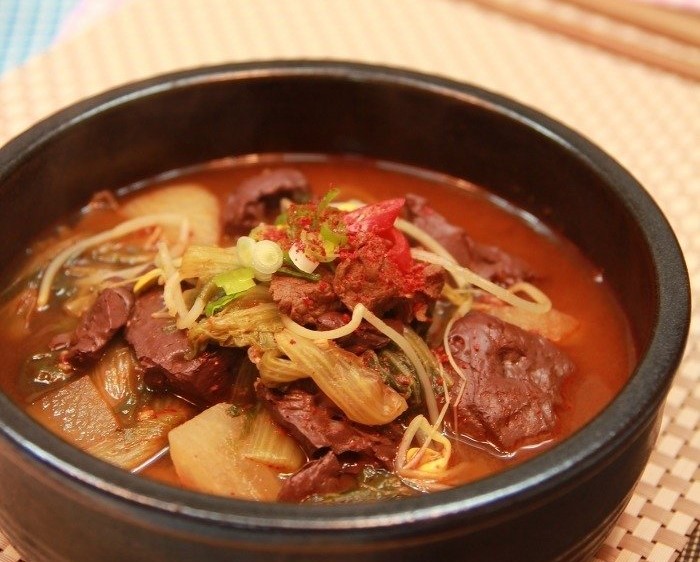
Korean haejang guk hearty beef vegetable soup Dinner

Korean Haejang-guk (Hearty Beef & Vegetable Soup)

~32g Protein ~7g Fiber
Ingredients
Beef brisket or short rib (sliced)Napa cabbageDried radish greens (or daikon)Doenjang pasteGochugaruGarlicAnchovies & dashima brothSesame oilScallions
Steps
  1. 1Make anchovy-dashima broth: simmer dried anchovies and a piece of dashima (kombu) in 5 cups water for 15 minutes. Strain and keep hot.
  2. 2If using dried radish greens, soak in warm water 20 minutes and squeeze dry. If using daikon, cut into matchsticks.
  3. 3Whisk 2 tbsp doenjang and 1 tsp gochugaru into the hot broth. Add sliced beef and simmer 15 minutes until tender.
  4. 4Add napa cabbage and radish greens or daikon. Simmer 8 minutes until vegetables are soft and broth is deeply flavored.
  5. 5Season with garlic and a drizzle of sesame oil. Top with scallions and serve piping hot with a small bowl of brown rice.
Why it's great for PCOS: Doenjang is Korea's most deeply fermented soybean paste — richer in bioactive isoflavones and probiotics than miso — directly supporting the androgen modulation and gut health central to PCOS management. Beef brisket provides collagen and glycine that support gut lining integrity, and napa cabbage adds glucosinolates that assist liver hormone clearance.
Inspired by Maangchi
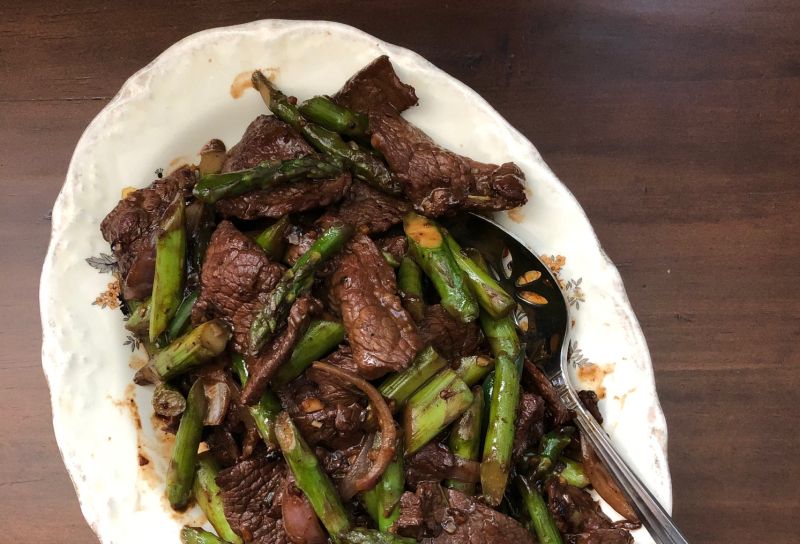
Vietnamese lemongrass beef stir fry bo xao sa Dinner

Vietnamese Lemongrass Beef Stir-Fry (Bò Xào Sả)

~34g Protein ~5g Fiber
Ingredients
Thinly sliced beef (sirloin)Lemongrass (2–3 stalks)GarlicShallotsFish sauceChili (optional)Sesame oilBell pepperBrown rice
Steps
  1. 1Finely mince the tender inner part of lemongrass stalks. Combine with minced garlic, sliced shallots, 1 tbsp fish sauce, and a pinch of sugar. Toss with thinly sliced beef and marinate 15 minutes.
  2. 2Heat wok or pan over very high heat until smoking. Add a thin layer of oil.
  3. 3Stir-fry beef in batches — do not overcrowd. Cook 1–2 minutes per batch until just browned. Remove and set aside.
  4. 4In the same pan, stir-fry sliced bell pepper and remaining shallots 2 minutes.
  5. 5Return beef, toss everything together with a drizzle of sesame oil and sliced chili if using. Serve immediately over brown rice.
Why it's great for PCOS: Lemongrass contains citral, a compound shown to have anti-androgenic properties that may help moderate the elevated testosterone levels characteristic of PCOS. Beef provides highly bioavailable heme iron and zinc — both chronically depleted in women with PCOS — and the high-heat quick cooking method preserves all nutrients while keeping the dish light.
Inspired by RecipeTin Eats
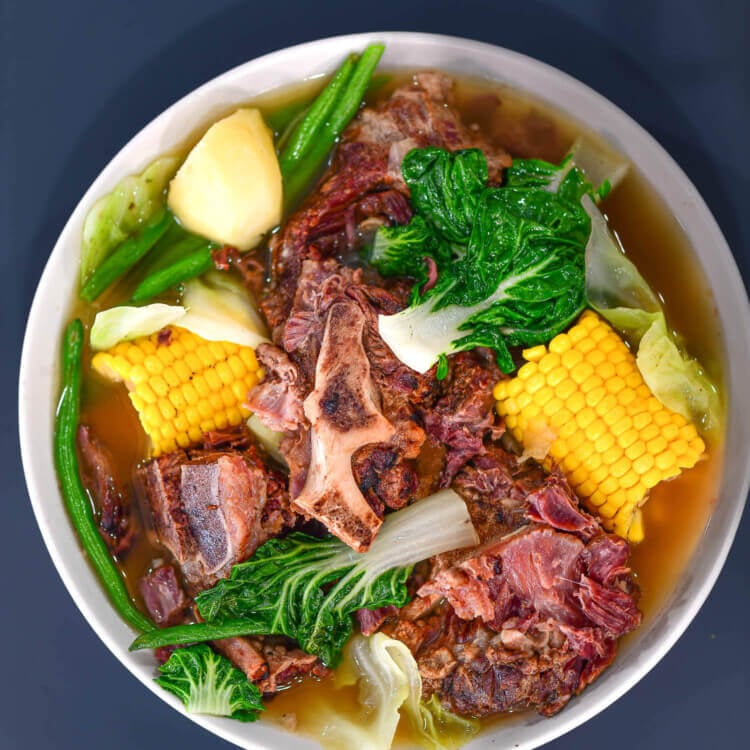
Filipino nilaga na baka beef vegetable soup Dinner

Filipino Nilaga na Baka (Beef & Vegetable Soup)

~32g Protein ~7g Fiber
Ingredients
Beef shank or short ribsCabbagePotatoes (small)Pechay (bok choy)OnionGarlicPeppercornsFish sauceScallions
Steps
  1. 1Blanch beef shank in boiling water for 5 minutes. Drain and rinse to remove impurities for a clear broth.
  2. 2In a fresh pot, cover beef with water. Add quartered onion, whole peppercorns, and fish sauce. Bring to a boil, then simmer 1.5–2 hours until beef is tender.
  3. 3Add small potatoes and simmer 15 minutes until just cooked.
  4. 4Add cabbage wedges and pechay (bok choy). Cook 3–4 minutes until wilted but still bright.
  5. 5Taste broth and season with fish sauce. Serve with brown rice and a side of fish sauce with calamansi for dipping.
Why it's great for PCOS: Nilaga's slow-simmered bone broth is rich in glycine and collagen that support gut lining integrity — important because gut permeability is increasingly linked to the systemic inflammation driving PCOS. Cabbage and pechay provide indole-3-carbinol, a compound that supports liver estrogen metabolism.
Inspired by Panlasang Pinoy
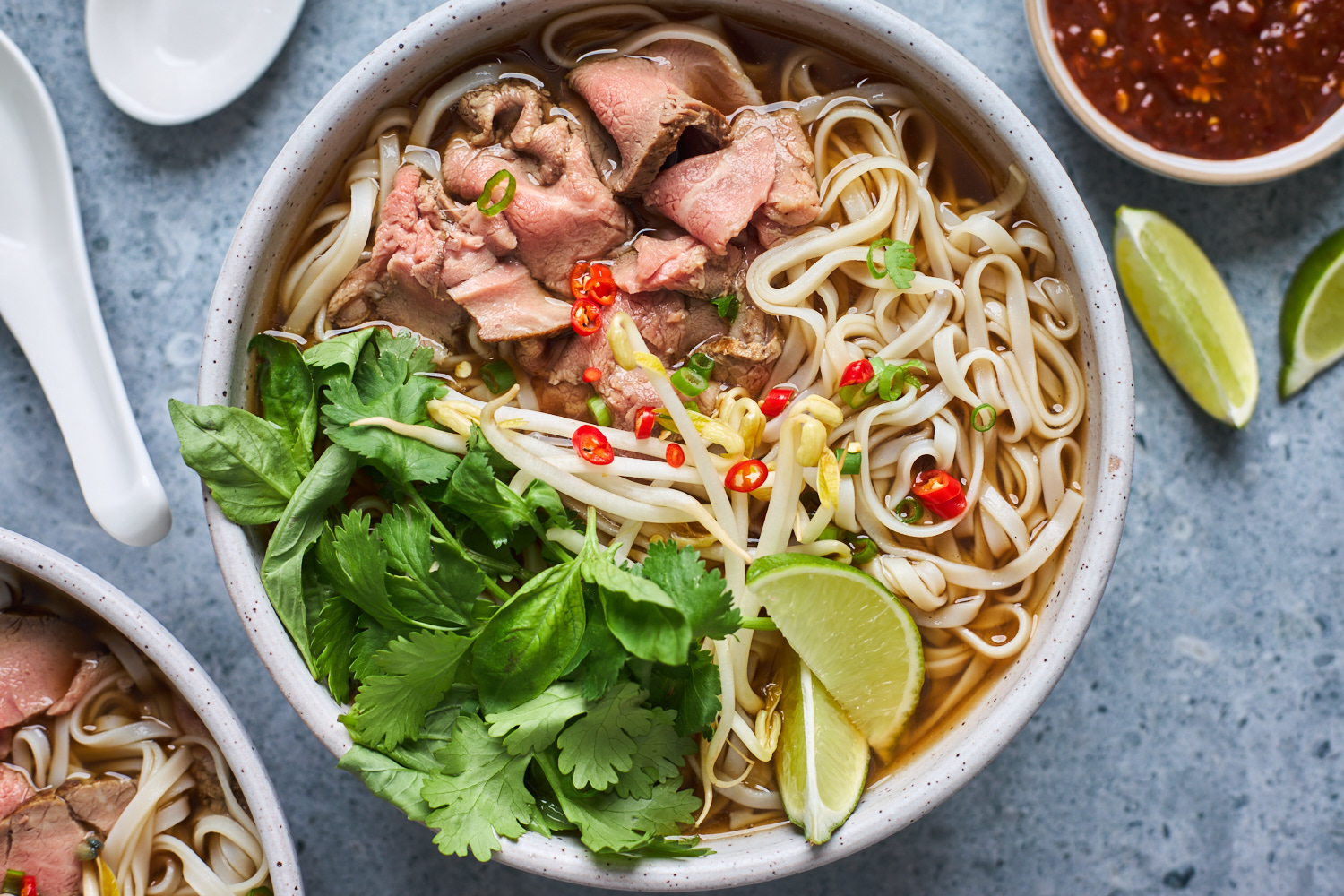
Vietnamese beef pho noodle soup Dinner

Vietnamese Beef Pho (Simplified Home Version)

~34g Protein ~5g Fiber
Ingredients
Thinly sliced beef (sirloin or eye round)Brown rice noodlesBeef broth (good quality)Star aniseCinnamon stickGingerFish sauceBean sproutsFresh basil & lime
Steps
  1. 1Toast star anise and cinnamon in a dry pan 1 minute. Char a halved ginger knob directly over flame until lightly blackened.
  2. 2Simmer beef broth with toasted spices, charred ginger, and 2 tbsp fish sauce for 20 minutes. Strain.
  3. 3Cook brown rice noodles per package. Drain and divide into bowls.
  4. 4Slice beef paper-thin. Lay raw slices over noodles — the hot broth will cook them.
  5. 5Ladle very hot broth over beef and noodles. Serve immediately with bean sprouts, fresh basil, and a wedge of lime on the side.
Why it's great for PCOS: Star anise contains anethole, a compound with demonstrated anti-androgenic properties that may help lower the elevated testosterone levels characteristic of PCOS. Ginger's anti-inflammatory gingerols reduce systemic inflammation, while beef provides heme iron and zinc — both commonly deficient in women with PCOS.
Inspired by RecipeTin Eats
Korean dubu jorim spicy braised tofu mushrooms Dinner

Korean Dubu Jorim (Spicy Braised Tofu) with Mushrooms

~22g Protein ~6g Fiber
Ingredients
Firm tofu (pressed, sliced thick)GochugaruSoy sauceSesame oilGarlicGingerKing oyster mushroomsScallionsSesame seedsBrown rice
Steps
  1. 1Press tofu firmly and cut into thick rectangles. Pan-fry in a thin layer of oil until golden and crispy on both sides.
  2. 2Mix sauce: 2 tbsp gochugaru, 2 tbsp soy sauce, 1 tbsp sesame oil, 3 cloves garlic, 1 tsp ginger, 1 tsp honey.
  3. 3Add sauce to the pan with tofu and sliced mushrooms.
  4. 4Simmer on medium 5 minutes until sauce thickens and coats everything deeply.
  5. 5Serve over brown rice, topped with scallions and sesame seeds.
Why it's great for PCOS: Firm tofu is one of the best PCOS-supportive proteins — its isoflavones gently compete with excess estrogens at receptor sites, helping to rebalance the estrogen-androgen ratio. Gochugaru's capsaicin measurably improves both insulin sensitivity and the inflammatory markers elevated in PCOS.
Inspired by Maangchi
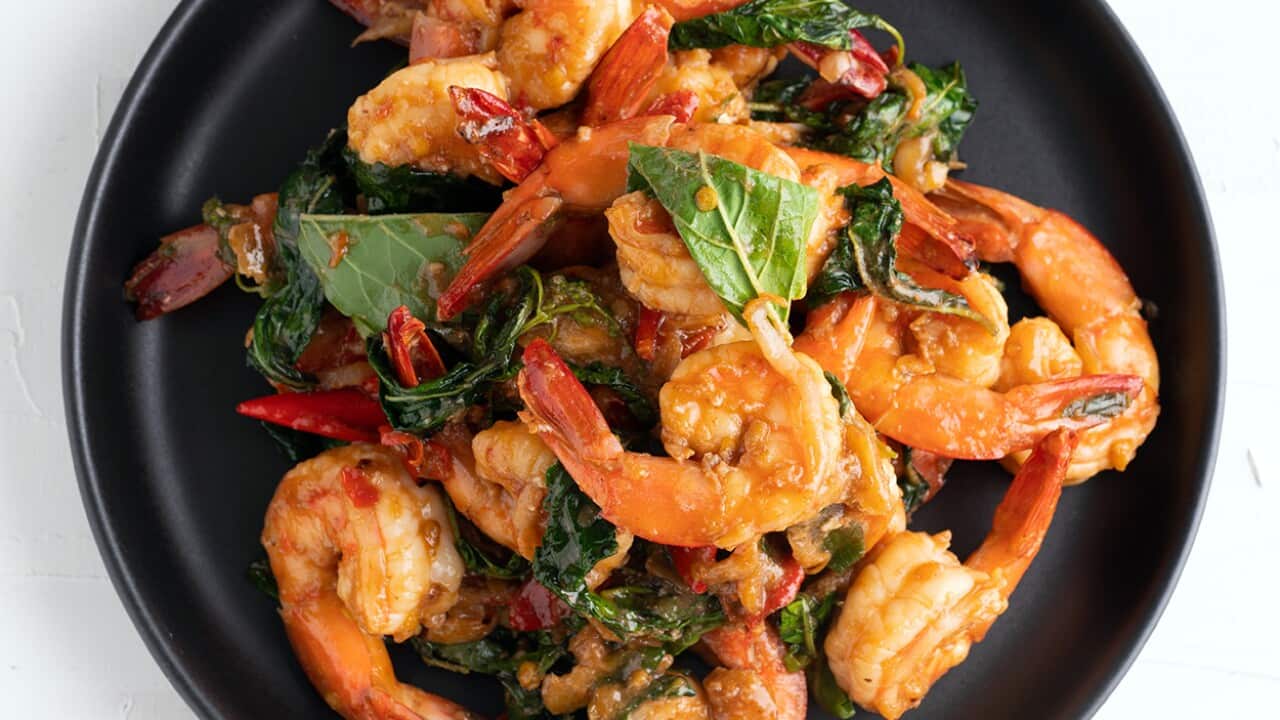
Thai basil shrimp stir fry pad krapow Dinner

Thai Basil Shrimp Stir-Fry (Pad Krapow Goong)

~30g Protein ~4g Fiber
Ingredients
Large shrimp (peeled)Thai basil (generous)GarlicThai chiliesOyster sauceFish sauceTamariCoconut oilBrown riceFried egg (optional)
Steps
  1. 1Make sauce: mix 1 tbsp oyster sauce, 1 tbsp fish sauce, 1 tsp tamari, and ½ tsp honey. Set aside.
  2. 2Heat coconut oil in a wok over very high heat until smoking. Add minced garlic and sliced chilies. Stir-fry 30 seconds.
  3. 3Add shrimp. Stir-fry 2 minutes until just pink — do not overcook.
  4. 4Pour sauce over shrimp. Toss to coat and cook 30 more seconds.
  5. 5Remove from heat and fold in a generous handful of Thai basil — the residual heat will wilt it perfectly. Serve over brown rice, topped with a fried egg if desired.
Why it's great for PCOS: Thai basil contains rosmarinic acid and eugenol, potent anti-inflammatory compounds that directly reduce the oxidative stress elevated in PCOS. Shrimp provide iodine and selenium that support thyroid function, and the high-heat minimal-oil cooking method keeps this low-calorie and fast to absorb.
Inspired by Hot Thai Kitchen
Filipino utan bisaya cebuano mixed vegetable soup shrimp Dinner

Filipino Utan Bisaya (Cebuano Mixed Vegetable Soup) with Shrimp

~20g Protein ~12g Fiber
Ingredients
ShrimpEggplantBitter melon (ampalaya)String beansSquash (kalabasa)OkraTomatoesOnionGarlicBagoong or fish sauce
Steps
  1. 1Sauté garlic, onion, and tomatoes until tomatoes break down.
  2. 2Add squash and a splash of water. Cover and cook 5 minutes.
  3. 3Add eggplant, bitter melon, string beans, and okra. Stir gently.
  4. 4Add shrimp. Pour in ¼ cup water. Cover and steam-cook 5–7 minutes until vegetables are tender and shrimp are pink.
  5. 5Season with bagoong or fish sauce. Serve with brown rice.
Why it's great for PCOS: Utan Bisaya is a cornerstone of Cebuano home cooking — a flexible, vegetable-forward soup made with whatever is seasonal. Bitter melon (ampalaya) contains charantin and polypeptide-p, two compounds with clinically studied blood-sugar-lowering effects particularly relevant to PCOS insulin resistance.
Inspired by Panlasang Pinoy
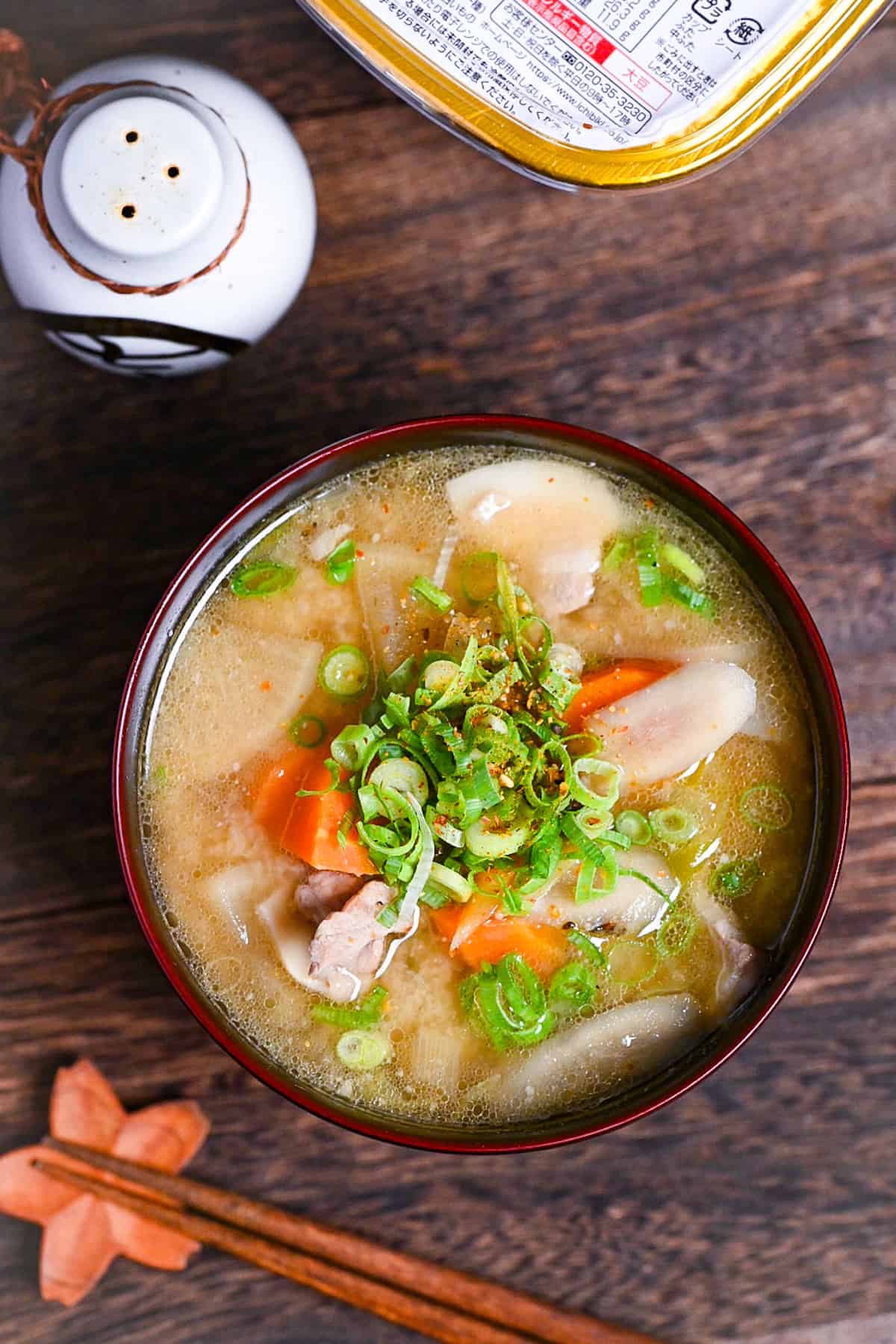
Japanese salmon vegetable miso soup tonjiru Dinner

Japanese Salmon & Vegetable Miso Soup (Tonjiru Style)

~30g Protein ~8g Fiber
Ingredients
Salmon (bone-in pieces)Daikon radishBurdock root (gobo)CarrotsKonjac noodlesWhite misoSesame oilScallions
Steps
  1. 1Heat sesame oil in a pot. Add sliced burdock, daikon, and carrots. Sauté 3 minutes.
  2. 2Pour in 4 cups dashi or water. Bring to a boil and simmer 10 minutes.
  3. 3Add salmon pieces and konjac noodles. Simmer 7 minutes.
  4. 4Reduce heat. Whisk in 3 tbsp white miso.
  5. 5Serve in deep bowls topped with scallions and a drizzle of sesame oil.
Why it's great for PCOS: Burdock root (gobo) is exceptionally high in inulin, a prebiotic fiber that feeds beneficial gut bacteria and has been shown to improve insulin sensitivity. Konjac noodles add glucomannan fiber with near-zero carbohydrates.
Inspired by Just One Cookbook
Japanese teriyaki beef bowl pickled cucumber Dinner

Japanese Teriyaki Beef Bowl with Pickled Cucumber

~36g Protein ~5g Fiber
Ingredients
Thinly sliced beef (sirloin)Brown riceTamariMirinSake or rice wineHoneyCucumberRice vinegarSesame seedsScallions
Steps
  1. 1Make quick pickled cucumber: thinly slice cucumber, toss with 1 tbsp rice vinegar, a pinch of salt, and a pinch of sugar. Let sit 15 minutes.
  2. 2Mix teriyaki sauce: 3 tbsp tamari, 2 tbsp mirin, 1 tbsp sake, 1 tsp honey. Simmer in a small pan until slightly thickened.
  3. 3Sear thinly sliced beef in a hot pan over high heat in batches — 1 minute per side for fond and caramelization.
  4. 4Add teriyaki sauce to the pan and toss beef to coat. Cook 30 seconds until glossy.
  5. 5Serve beef over brown rice, topped with pickled cucumber, sesame seeds, and scallions.
Why it's great for PCOS: Beef provides highly bioavailable heme iron and zinc — both chronically low in many women with PCOS and directly involved in egg quality and progesterone production. The quick-pickled cucumber adds probiotics and acetic acid that help blunt the post-meal blood sugar spike from the rice.
Inspired by Just One Cookbook
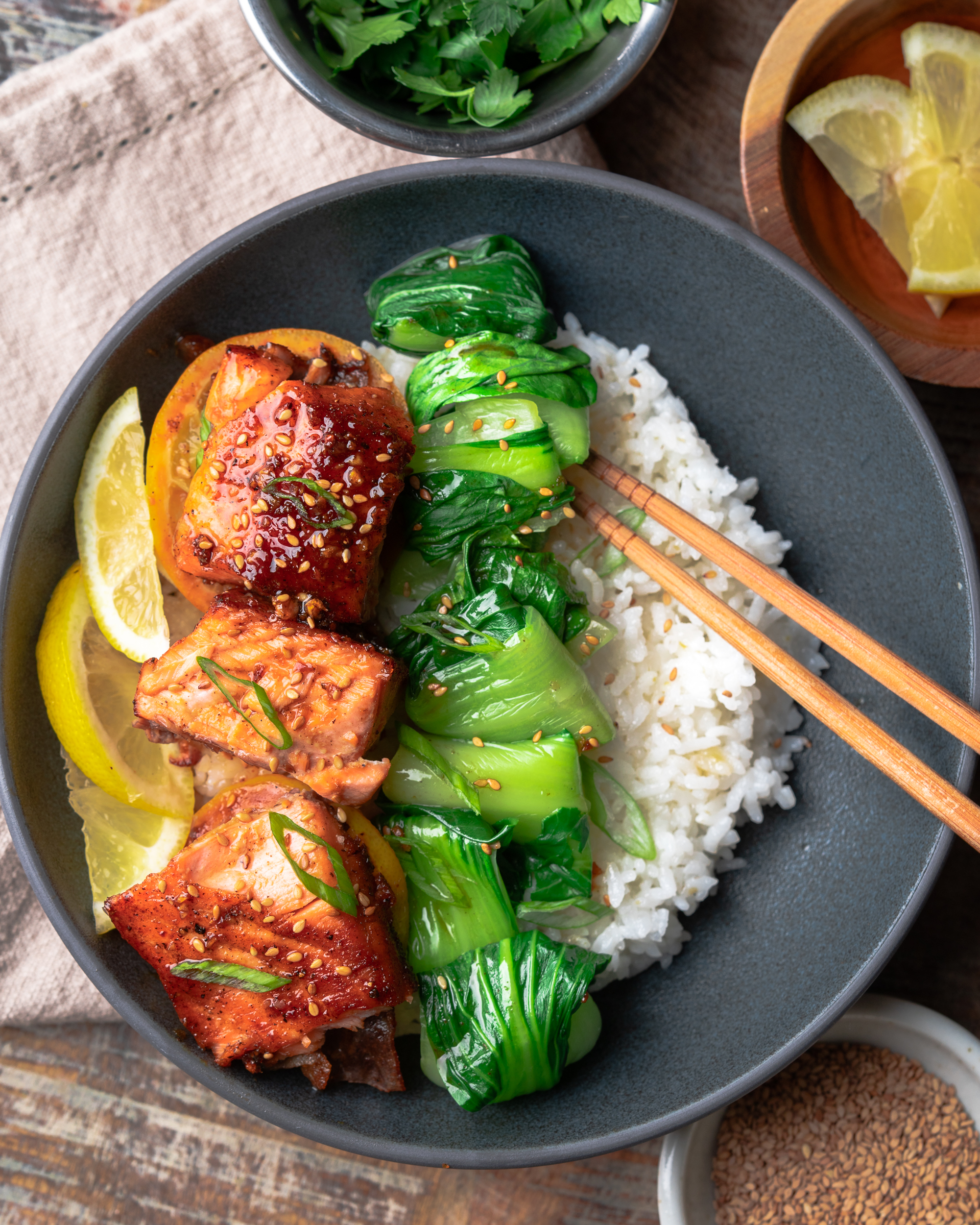
Chinese honey garlic salmon bok choy Dinner

Chinese Honey Garlic Salmon with Bok Choy

~36g Protein ~5g Fiber
Ingredients
Salmon filletGarlic (generous)HoneyTamariRice vinegarSesame oilBok choyGingerBrown rice
Steps
  1. 1Mix sauce: 2 tbsp tamari, 1 tbsp honey, 1 tbsp rice vinegar, 1 tsp sesame oil, and 3 minced garlic cloves.
  2. 2Pat salmon dry and season with salt and white pepper. Sear skin-side down in a hot pan 4 minutes until skin is crispy. Flip and cook 2 minutes more.
  3. 3Pour sauce into the pan. Let it bubble and caramelize around the salmon for 1–2 minutes, spooning over the top.
  4. 4In a separate pan, stir-fry halved bok choy with a little sesame oil and grated ginger until just wilted, about 3 minutes.
  5. 5Serve salmon over brown rice with bok choy alongside. Spoon any remaining pan sauce over everything.
Why it's great for PCOS: Salmon is one of the most evidence-backed foods for PCOS — its omega-3 fatty acids reduce androgen levels and improve insulin sensitivity simultaneously. Garlic contains allicin shown to lower testosterone, while bok choy's indole-3-carbinol supports healthy estrogen metabolism. This simple preparation maximises nutrients with minimal fuss.
Inspired by Woks of Life
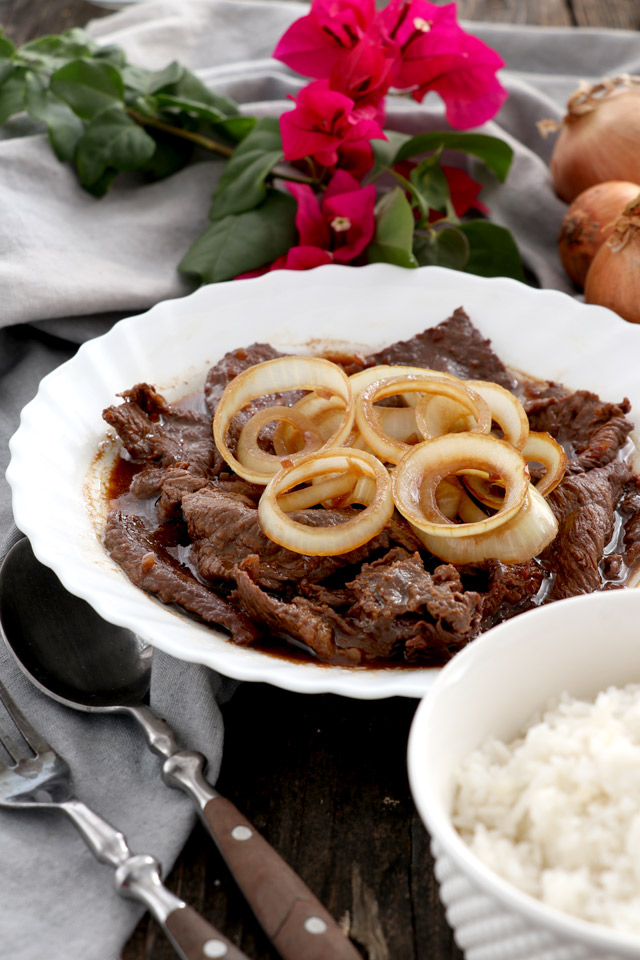
Filipino bistek tagalog beef citrus onion Dinner

Filipino Bistek Tagalog (Beef with Citrus & Onion)

~32g Protein ~5g Fiber
Ingredients
Lean beef sirloinOnion (generous)Calamansi or lemonSoy sauceGarlicSesame oilBlack pepperBrown rice
Steps
  1. 1Slice beef sirloin thin (freeze briefly for easier slicing). Marinate in calamansi juice, soy sauce, garlic, and pepper for 30 minutes.
  2. 2Pan-fry marinated beef in a very hot pan until browned. Work in batches. Set aside.
  3. 3In same pan, sauté generous rings of onion in remaining marinade until softened and slightly caramelized.
  4. 4Return beef to pan. Toss with onions and cook 1 more minute.
  5. 5Serve immediately over brown rice with extra calamansi wedges on the side.
Why it's great for PCOS: Calamansi is rich in vitamin C and flavonoids that reduce the oxidative stress elevated in PCOS. The citrus marinade also helps break down meat proteins, improving iron absorption — important for managing PCOS-related heavy bleeding.
Inspired by Panlasang Pinoy
Japanese tofu mushroom miso nabe hot pot Dinner

Japanese Tofu & Mushroom Miso Nabe (Hot Pot)

~24g Protein ~8g Fiber
Ingredients
Firm tofuShiitake mushroomsEnoki mushroomsNapa cabbageKombu dashiWhite misoMirinSoy sauceScallionsSesame oilBrown rice (side)
Steps
  1. 1Prepare kombu dashi by simmering kombu in water 15 minutes. Remove kombu.
  2. 2Whisk 3 tbsp white miso and 1 tbsp mirin into the warm dashi.
  3. 3Bring to a gentle simmer. Add napa cabbage and both mushrooms. Cook 5 minutes.
  4. 4Add cubed firm tofu. Simmer 3 more minutes.
  5. 5Finish with a drizzle of sesame oil. Serve from the pot at the table with brown rice and scallions.
Why it's great for PCOS: Kombu dashi is one of the richest natural sources of iodine, which supports thyroid function — critically linked to PCOS metabolic dysfunction. White miso's fermentation-derived isoflavones support gentle hormone modulation, while the diverse mushrooms deliver beta-glucans that improve insulin receptor sensitivity.
Inspired by Just One Cookbook